Thanks for Being My Chaplain, Too

As a battalion chaplain, I was asked to say a prayer before lunch at the annual family Christmas party. I love to pray. I love being visible to my Soldiers so that they know who they can go to when they need help or guidance or counseling. So I was glad for the opportunity. I also love telling my Soldiers about Jesus, but the annual family holiday party isn’t the place to preach the gospel because it is a command event . . . not a religious service.

When the time came, the commander invited me to the microphone and I prayed. I thanked the Lord for the families of the Soldiers. I asked for divine safety and protection. I prayed for the marriages and child-parent relationships. I expressed hope that the events of the day would be meaningful, fun, and encouraging. And I finished the prayer not by saying “in Jesus’s Name, Amen.” Instead, I finished by thanking the Lord for his goodness and blessings, Amen.

I returned to the table where I was sitting with my wife, and after a few minutes a young Jewish officer approached me, held out his hand to me, and said, “Thank you for being my chaplain, too!”

Do You Need a Mentor?

One of the ways to avoid getting into trouble is to establish accountability measures and allow key people in your life to hold you answerable for what is morally right and what is helpful in your career. It is important to establish professional and spiritual mentoring relationships. We all need someone we can turn to when we are tempted, when we’re hurting, and when we’re about to do something unwise.

When I became a chaplain and went to the Officer Basic Course, Ron Casteel was the class leader. He and I became friends and kept in touch throughout our careers. Not only was he a friend, he became my mentor. Ron knew more than I did about how the military worked. He understood people. And several times when I needed guidance, he was there for me.

Fourteen years after completing the basic course, I had the opportunity to work for him at a senior command. Not only was he my friend and mentor. Now he was my boss. It was a great experience. After he retired, there was one more time that I needed his help professionally, and he was there for me. Having him as a mentor made a powerful impact on my life and career.

Perhaps you should consider finding a mentor. In fact, you might want to identify two mentors: one for spiritual accountability, and one for professional development. Allow key people in your life to hold you answerable for what is morally right, and what is helpful in your career. And listen when they speak or offer guidance.

Wherever you are in your career, it may be important for your growth, development, and success to find one or two people who can speak into your life as a friend and mentor.

Driving Up the Mountain

I was a chaplain with an infantry battalion that was conducting field exercises in Yakima, Washington. While visiting our soldiers at remote locations, I asked my Chaplain Assistant if he would go up and over the mountain instead of taking the road around it. He agreed, but soon stopped and said he couldn’t go further because it was too steep. I told him the Hummer was built for steep inclines and asked him to proceed.

That’s when he said, “Chaplain, I’m not stopping because the vehicle can’t make it. I’m stopping because it’s too scary. I don’t want to drive up this mountain!”

“I understand. Let’s trade places and I’ll drive.”

Being a good, responsible NCO, he insisted that I show him my military driving license. And I did.

Driving up that mountain was so much fun. We got to the top, got out, and looked around. We could see for miles in each direction. Coming back down was even scarier because it seemed we were looking straight down. It was exhilarating. We were now ready to go and visit our Soldiers.

Funeral for a Clock

After I completed the Army Chaplain Basic Course, my first assignment was with a medical unit. While participating in a field training exercise at Camp Parks in California, I met with the First Sergeant one day, and he told me that one of his Soldiers died. When I asked who the soldier was, he told me the name of the guy was “Otto.”

Well, I knew Otto was the name of the alarm clock dressed in an Army uniform. Instead of a bugle playing Reveille first thing each morning, the First Sergeant held a microphone up to the clock to wake up the troops. When the alarm sounded, a Drill Sergeant voice shouted, “Rise and shine, you sleepyheads, Rise and shine!” Somebody got tired of hearing that stupid clock shout “Rise and Shine,” so he made a noose and strung up poor Otto between two field tents. There he was swinging in the breeze.

“What do you do when a Soldier dies?” the First Sergeant asked.

“I would do a funeral,” I answered matter-of-factly.

“Would you?” His eyes got real big.

Two days later, still out in the field on the back side of an Army training base, we had a funeral complete with full military honors and protocol . . . for Otto the Clock. One of the Soldiers was a carpenter. He used scrap lumber to build a scale model replica of a coffin. Six Soldiers served as pall bearers, marching in step as they carried the coffin to the ritual. The Colonel gave the commander’s speech. The First Sergeant provided a tearful eulogy. And the Chaplain’s funeral sermon was a poem about time. Each of us is allotted a certain number of days, and when our time runs out, we’re called to give an account before the Great Clockmaker in the Sky.

A hundred Soldiers laughed so hard they literally fell out of formation onto their hands and knees in the dirt. Some of them pretended to howl and cry, others had actual tears because they were laughing so hard.

My college and seminary professors and ministerial textbooks didn’t cover funerals for clocks, and homiletics classes never trained me to write sermons as poems, but that event created a rapport with the Soldiers better than anything I could have planned. For the rest of my time with that unit, I had an open door of ministry.

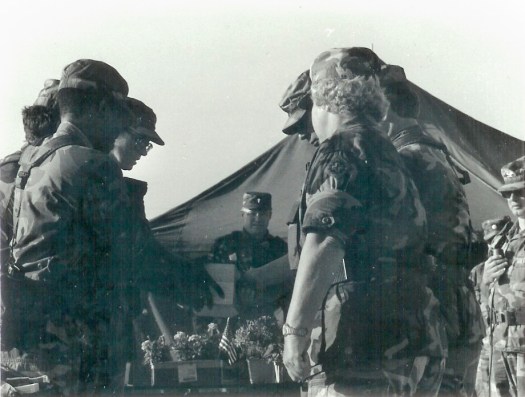
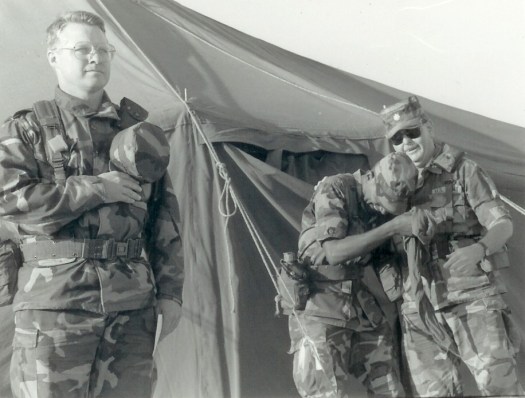
Actual pictures of the funeral. Click here to read the poem.

Military Ministry: Chaplains in the 21st Century

I am excited to announce that our publisher just released the book Military Ministry: Chaplains in the Twenty-First Century, second edition.

When we started writing this book in 2020, we understood the importance of social media in ministry, so the first edition contained a dozen or so statements about social media, but there wasn’t a stand-alone chapter with a strategy for using social media or technology in ministry in the military. In the past five years, however, social media has explosively become much more pervasive, and in many ways has come to define the present generation. Therefore, it became obvious that we needed to provide an updated edition that would speak directly to this issue.

At a lunch meeting to discuss the preparation of a new chapter and what it should include, Dr. Keith Travis suggested that we ask Chaplain Chris Linzey if he would write the new chapter because Chris is on the cutting edge of using social media platforms for ministry in the United States Navy. Chris is an outstanding chaplain and a master at using new technologies in military ministry. We agreed that Chris would be the best person to write the new content. When we approached him with the idea, he responded right away with an affirmative reply. His original submission turned into two full chapters.

With that in mind, we are pleased to offer this second edition of Military Ministry: Chaplains in the Twenty-First Century. Chapters 26 and 27 are the brand-new chapters written by Chaplain Chris Linzey. In addition, there is a new Guest Anecdote from a chaplain who understands the use of social media in effective ministry. We think this material will be a tremendous benefit for chaplains in all of the armed forces.

It is our hope that you will be informed, encouraged, and inspired as you read this book. You are always invited to reach out to us by email, through our websites, social media, or the QR codes at the end of chapter 27. We’d love to hear your comments or reactions to the content in the book. May the Lord bless you as you serve as a chaplain in the military.

#MilitaryMinistry #MilitaryChaplainGuide #TrainingMilitaryChaplains

GOTCHA

Early in my military career, I showed up at a new infantry battalion one day and started meeting some of the guys. The Sergeant Major introduced himself and asked, “Hey Chaplain, do you have your Gotcha Cards?”

“No, Sergeant Major. I’ve never heard of a Gotcha Card, and don’t know what it is, so I’m pretty sure I don’t have one. What is it?”

“Our previous chaplain, every time he heard one of us cuss or swear or use the Lord’s name in vain would pull out a business card, but all it said in big bold letters was GOTCHA. So when the guys heard we were getting a new chaplain, they started wondering if you were going to be like the last one.”

“I bet you guys hated him.”

“Yes. We. Did.”

“Tell you what. I’m not planning on having any Gotcha Cards printed up, so you can relax. Cuss if you want. I’m just here to love you guys.”

Apparently, a bunch of Soldiers were listening to the conversation, because as soon as I made that last statement, a cheer erupted from around the corner.

“You’re gonna fit in fine here, Chaps. Nice to have you aboard.”

Over the next two years, I led more than 25 of those guys to faith in Christ, and I never once said, GOTCHA. Oh, they cussed, alright. But I figured it was the Holy Spirit’s job to reach them, and he does a pretty good job. I just had to do my part, which was love them and be consistent in setting an example of what a Christian is and does.

This is the opening story in my new book titled Gotcha.

Letter from a Reader

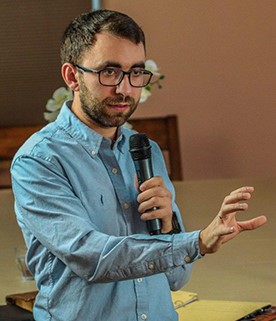
Dr. Keith Travis is my co-writer for the book titled Military Ministry: Chaplains in the Twenty-First Century. He got an email today from a graduate student who is preparing to become a chaplain, and gave me permission to share this note.

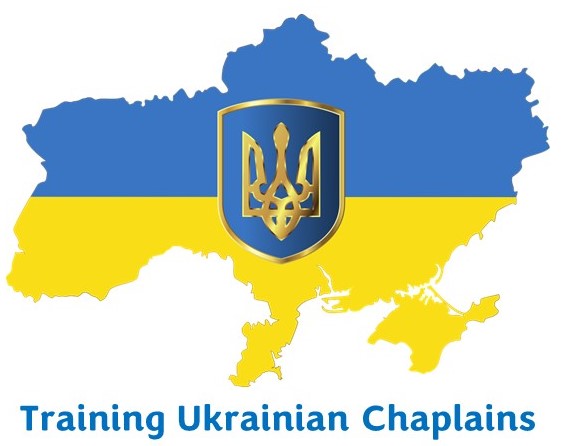
Training Ukrainian Chaplains

Because of political turmoil and the war in Ukraine, this is a critical moment in Eastern Europe. Recognizing the need for pluralistic chaplain ministry in its armed forces, the Ukrainian military created a brand-new chaplain corps that was approved by the government in 2022 and officially started in 2023. Ukrainian leaders are now looking for outside help to train and educate their chaplains.

Video Link: Click here to Learn More

There’s a Theological Seminary in Poltava, Ukraine with an outstanding reputation and the military has asked the school to provide training and education for their chaplains. The seminary reached out to the Chaplaincy Department of the General Council of the Assemblies of God to help provide that training, and they asked us to put a team together.
The seminary is asking for a three-year educational training plan that will encompass theology, practical aspects of military chaplaincy, and specialized topics that will prepare clergy for what they may experience as military chaplains in Ukraine.

Our team is prepared to teach and train Ukrainian chaplains in a wide range a specialties and skills.

The Armed Forces of Ukraine has committed to send their chaplains to the Poltava Theological Seminary for six classes per year for the next three years. With our experience and expertise, we can provide what their chaplains need, but because of the war, they can’t pay our expenses to get there.

And they don’t have the means to purchase or create a curriculum. This means we have to raise the money, and we estimate that it will take $24,000 per year to train the chaplains.
This will cover our travel expenses, classroom materials and supplies, and the curriculum that we will prepare and leave with them for continued use. After three years, they will have enough chaplains complete the program that it will then be self-sustaining and our job will be done.

The long-range goal is to raise $72,000 for a three-year training cycle, but our immediate goal is to raise $24,000 for the first year. Contributions are tax deductible through the Illinois District of the Assemblies of God.

The motto of the chaplains of the Armed forces of Ukraine is “Being There.” That is their mission, and they are fulfilling that calling even through some pretty tough situations and bleak conditions.

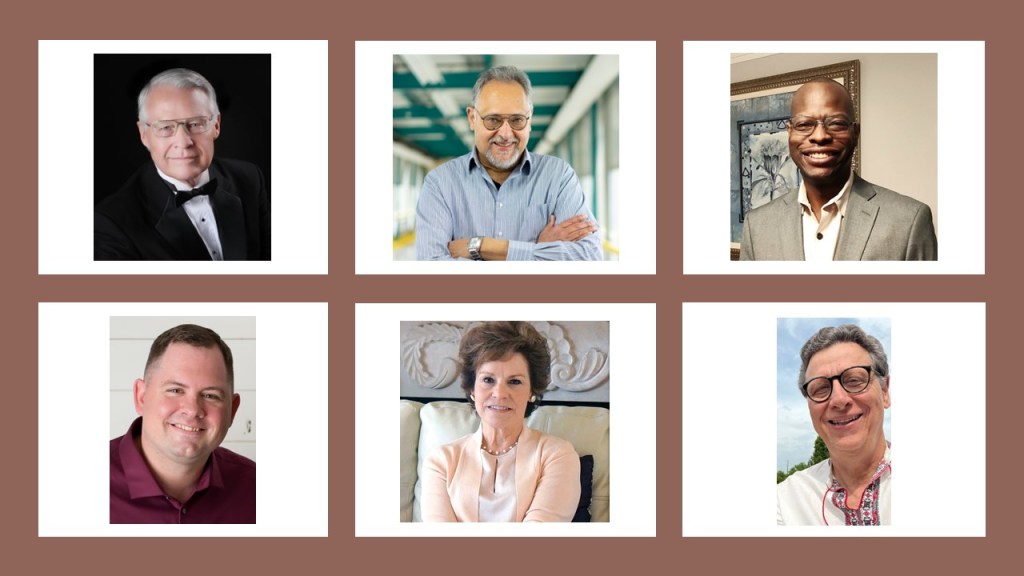
Top Row Left to Right: Paul Linzey, Manny Cordero, Vince Lambert. Second Row Left to Right: Josh Andrew, Sharon Ackerman, John Michno

John Michno completed the MDiv at Fuller Theological Seminary and became a military chaplain. After retiring from the military, he pastored in Ukraine and Russia. He is Ukrainian American, speaks Ukrainian and Russian, and is a missionary with the National Slavic District of the Assemblies of God.

Dr. Sharon Ackerman is a hospital chaplain with experience as an educator, pastor, sociologist, and missionary. She has worked for human rights and religious freedom for women and persecuted Christians, and is the author of several books. She has graduate degrees in religion and sociology and two law degrees from Cornell Law School.

Joshua Andrew is a former Army chaplain. He has served over 17 years as a pastor, educator, and a military chaplain in both combat and humanitarian roles. He holds an MDiv in Theology and a PhD in Education.

Dr. Manuel A. Cordero is the Senior Director for U.S. Chaplaincy Ministries for The General Council of the Assemblies of God.  He has been in chaplaincy ministry for more than 44 years, originally working with the Federal Bureau of Prisons for nearly 24 years.

Vince Lambert is a senior military chaplain who spent a year in Ukraine training volunteer military chaplains. He has an MDiv with additional graduate work towards a DMin, and is the author of the devotional book, 30 Days Ablaze.

Dr. Paul Linzey is a retired military chaplain with war-time experience. He has trained U.S. and international chaplains, and now teaches at a Christian college. He has written two books about chaplain ministry.

John Michno and Paul Linzey are co-team leaders for this project.

It didn’t take long after Russia invaded Ukraine for the Ukrainian government and military to realize they needed full-time, professional chaplains in the Armed Forces of Ukraine. Historically, Ukraine depended on volunteer clergy to serve the military. This is a huge development. But along with it came the decision to open the chaplaincy to clergy from multiple faith groups, so they are moving towards a new pluralism and diversity.

Now that the foundation is in place, the next step is to provide the professional training and education the chaplains need, which is why they reached out to the Poltava Theological Seminary, who in turn asked us to partner with them for three years.

Our team has the education, the experience, and the expertise to accomplish this mission. What we need is the financial backing of people who care, who understand the immediacy of the open door in Ukraine, and who want to do something about it.

Igor Skrypnichenko is the Vice President of the Poltava Theological Seminary. Because some of his graduates are now chaplains doing great work among soldiers, he has been asked to train new chaplains. It is largely because of Igor’s compassion, excellence, and tireless hard work that he has developed a rapport with Ukrainian leaders, and why they want him to head up chaplain training. But just like the rest of us, Igor has only twenty-four hours in a day, and is spreading himself too thin.

When Igor reached out to the Chaplain Department of the Assemblies of God, they asked John Michno and me to put a team together. As you can see above, the chaplains we have assembled for this project are outstanding.

There are several ways you can help us. First is to pray. The war is still going on, and February 2024 will begin the third year of the current conflict. Pray for peace. Pray for the people who have lost everything. And pray for safety, wisdom, and discernment for us. Another way you can help is to support us with your giving. We are preparing six classes per year. Each class requires a teacher to create the curriculum, travel to Ukraine, and provide materials and supplies.

You may send donations by mail to:

Or give online at IDCAG.ORG. You are welcome to designate a donation to me or specify any member of the team. You may also give an undesignated contribution that we will share.

Thank you so much for your generosity. We really cannot do this without your help.

God Speaks through Our Stories

The message below was sent to me via Messenger from a minister in Kansas who could relate to some of the stories in our book on Military Ministry. His name is Sean, and he gave me permission to share it.

“I am a seminary student and was just selected to the Army Chaplain Candidate program. During my studies, we read your book on Military Ministry and God spoke to me through your testimony. My grandfather was a SeaBee and both of my brothers were in the Navy, with the one I’m closest to retiring as a Chief Petty Officer. My whole life I have wanted to join the Navy but because I had asthma in high school I was unable to join. In adulthood, I have been healed of it and had my plans set on becoming a Navy Chaplain. I’m the Reserves, as that was my wife’s agreement.

When I read in your book about the similar situation you faced, God began speaking to me about whether I was willing to shift course and follow where He needed me rather than where I wanted to be. The Navy would not grant me the medical waiver needed, but now I am getting ready to begin ministering as an Army chaplain. I wanted to say thank you for your service, your willingness to follow God, and the inspiration I received while reading about your experiences. God bless!”

Who might God want you to tell your story to?

Your Book Was the Perfect Addition to My Research

The following is a from an actual email that my co-author (Keith Travis) received from a minister doing his doctoral research. Keith and I are grateful for the reception the book is getting from people in churches, universities, seminaries, and the military.

“When a friend recommended your book, I bought it that day and have to say, I believe it was truly providential.

My research needed a little more meat on the bones, and your work has been the perfect addition. The practical nature of the insights into actual ministry have made your book like the perfect spice added to a bland, theoretical roast that turns it all into a great meal. I have enjoyed it thoroughly.

I could not be more thankful for this book coming to my desk at the perfect time. Just wanted to drop a short line to introduce myself and let you know how much I have enjoyed and appreciated your book.”