Built from 1934-1936 and commissioned in 1937, the USS Yorktown was involved in some major battles in WWII and received the nickname . . . The Fighting Lady. There were four announcements that the crew of 2,217 sailors and about 300 aviators didn’t want to hear.
1. “Battle Stations!” That meant they were about to enter combat.
2. “Fire!” This didn’t mean to shoot at anyone. It meant there was a fire on board the ship. The ship was home, and there was no front or back door to leave a burning inferno, so fire was a dreaded enemy.
3. “Stand by for attack!” In battle, everyone from the captain to the newest recruit knew he might be killed.
4. “Abandon Ship!” This one was nerve-wracking because the nearest land was three miles away–straight down! And sharks were not the kind of company they preferred.
Dad was on the Yorktown each time it engaged the enemy. With headphones on, he heard the blood-curdling words, “Zeros at 50 miles out!” These Zeros, sometimes called Bandits, were Japanese fighter-bombers and torpedo planes.
“Zeros at 25 miles out. Stand by for air and torpedo attack!”
Dad’s mind raced back to the battle of the Coral Sea just four short weeks earlier. It seemed like a year ago, yet it felt like yesterday. An armor-piercing bomb hit the flight deck and sliced through three more decks before exploding in the room next to his station. It immediately obliterated 35 of his shipmates, but if it had been eight feet closer, it would have also splattered Dad.
Dad’s job was to pass reports to damage-control crews who then fought their way through the rubble and did their best to put out fires, make repairs, and keep The Fighting Lady afloat.
But he did much more than that. Through his interaction with men of all rank, he taught them how to face adversity, face hardship, and even face death with head held high and without fear. He revealed his faith in God when the world seemed to be falling apart, and shared emotional and spiritual strength through personal conviction.
2nd Class Petty Officer Stanford E. Linzey, Jr., loved the Lord, loved life, and loved people. He never hated anyone, including the Japanese. But he was a man with high integrity, and to the best of his ability, he did his job to help his country.
The above is an excerpt from the introduction to the book Dead in the Water. The book was written by Captain Stanford E. Linzey, Jr., CHC, USN, Retired. The introduction was added by my brother, Stanford E. Linzey III. I plan to post several excerpts leading up to December 7, also known as National Pearl Harbor Remembrance Day.
I’ll never forget what he said, or the look on his face as he relived the hell of battle. Dad’s words were bathed in emotion. Hardened by the intense heat of battle, he still choked up at times as he remembered Guadalcanal, Gilbert Islands, Coral Sea, and Midway. He repeated “Coral Sea,” hesitated, breathed deeply and said, “Midway.”
Did I detect anger? Or was it sorrow?
Dad won the Texas State High School Championship as a clarinetist in the school band, then joined the navy in 1938 as a musician. In peace time he played the clarinet in the USS Yorktown Band, and the saxophone in the jazz band. But in battle he was an intra-ship radioman, assigned to the aircraft carrier, USS Yorktown CV-5.
Dad was a Texan, as was Admiral Chester Nimitz, and often told me of battles in Texas history. Sentences we read without emotion in history books became commands bathed in blood and tears when Dad said them. If you’re not a Texan, Remember the Alamo! and Remember Goliad! could mean almost nothing to you. But it sometimes brings tears to my eyes and raises goose bumps on my arms because my Dad was a Texan! No, he didn’t fight at the Alamo in 1836 or at Goliad in 1835, but he made sure that I, his oldest son, knew about them.
Dad didn’t join the navy to kill people. He didn’t even want to go to war. As a nine-year-old boy, when he had the privilege of seeing John Philip Souza on Souza’s last tour with the United States Marine Band, he was inspired and dedicated himself to music. Becoming an award-winning musician, he wanted to join the United States Navy Band. Fighting a war was not on his radar screen. However, personal plans and goals don’t always develop to our liking. In this case, Japan bombed Pearl Harbor on December 7, 1941.
The above is an excerpt from the introduction to the book Dead in the Water. The book was written by Captain Stanford E. Linzey, Jr., CHC, USN, Retired. The introduction was added by my brother, Stanford E. Linzey III. I plan to post several excerpts leading up to December 7, also known as National Pearl Harbor Remembrance Day.
The call of God is one of the most important points in your thinking about becoming a military chaplain, and this call has professional, personal, and spiritual dimensions.
The professional side of the call has a lot to do with how the military looks at you and your work as a chaplain. When a minister goes to an accessioning board to apply for for Active Duty, Reserve, or National Guard for the Army, Air Force, or Navy, one of the topics each candidate will have to respond to is “Tell us about your call.” An applicant should be able to communicate a definite experience when the Lord called him or her to become a military chaplain.
There is also a personal side to the call to military ministry. Fulfilling the call of God on your life isn’t easy. There will be tough days. There may be times you feel like quitting or throwing in the towel. You have to do physical training when you’d rather be relaxing with your family or spending time with friends.
There is also a spiritual side to the call. In 1994, Christian musician Steven Curtis Chapman wrote a song titled “Burn the Ships.” The song tells the legendary story of Hernán Cortés, the Spanish conquistador who sailed from Spain with a fleet of ships to conquer the Aztecs in Mexico. After arriving, some of the men were homesick, fed up with being away from family and the life they knew, and threatened to return to Spain. Cortés responded by ordering the ships to be destroyed so his men had no way to leave. The lyrics include the devotional application that when we make a decision to follow Christ, there’s no going back. In essence, sometimes we have to “burn the ships” in order to remain faithful to the Lord and his call on our lives.
The point is this: if you obey the call of God to minister as a military chaplain, the Lord will strengthen you. God called you to the work, God will prepare you for the work, and God will sustain you in the work.
A specific divine call to any ministry will change the direction of your life. It will motivate you and lead to new behaviors and habits. It will give you the strength, stamina, and tenacity that you’re going to need if you’re to run the race and finish the course. And just as important, the call will come with a divine anointing, and the promise that the lord will be with you every step of the way.
The call of God, therefore, is undoubtedly one of the most important points in thinking about becoming a military chaplain, and this call includes the professional, personal, and spiritual dimensions of your life. If you aren’t sure, then take more time to pray and seek God until he confirms his call for your life’s work. There must be no doubt. There’s no room for wondering whether this is where you are called to serve. You don’t have the luxury to guess or assume. You have to be certain.
This is an excerpt from the book Military Ministry: Chaplains in the Twenty-First Century.
Jesus was not in the military and did not routinely go out of his way to minister to soldiers. Yet a Roman centurion who needed help came to Jesus.
Jon Bloom, a staff writer for an organization called Desiring God, makes the following observation: Luke 7:9 and Matthew 8:10 use the Greek word thaumazo (thou-mad’-zo) which is translated as “marveled” or “amazed” to describe Jesus’s response to the centurion’s faith. The only other time this word is used to describe the Lord’s response to other people’s faith is in Mark 6:6, when he marvels at the lack of faith in the people of Nazareth, his hometown.
Bloom calls this centurion a “firstfruit and a foreshadow of what Jesus had come to bring about.” It may be that Jesus Himself was the first in the New Testament to minister to people in the military, and the “firstfruit and foreshadow” refers to thousands of Soldiers, Sailors, Airmen, Marines, and Coast Guardsmen who will come to faith in Christ through the message of the Gospel.
Peter also had an encounter with a centurion. Acts chapter ten tells of Peter’s vision about eating unclean food. In the dream, the Lord told him to stop calling something unclean if the Lord Himself declared it clean. Peter woke up and was thinking about the experience when Cornelius’s representatives arrived. The Lord told Peter to go with the men, so he went to the home of the centurion and proclaimed the Good News of Jesus Christ. Acts 10:44 says everyone who heard Peter’s message received the Holy Spirit and became believers in Jesus.
In this account, the representative of Christ went to where the soldier was in order to minister to him. This is exactly what a chaplain does: after praying, going to where the people are, spending time with them, and paying attention to the leading of the Holy Spirit, who opens a door for sharing the message of the Savior.
The significance that Peter attributes to his experience is that the Lord has opened the door for Gentiles to come into the Kingdom of God. But there’s another, more subtle significance that we can’t afford to miss. In the same way that the Church must no longer think of the gentiles as bad people who are outsiders, the Church must not think about people in the military as being unclean or bad. It’s not an accident that the gentile who Peter visited was a military man.
Peter understood that Christians should accept, love, and serve all people, all demographics, and all ethnicities. Nobody is to be considered inferior, less valuable, or unworthy. The same is true for those serving in the military. They are people who need God, need to be loved and accepted, need someone to tell them about Jesus, need someone who’ll be an example of Christian faith and lifestyle.
Military chaplains have an opportunity almost every day to speak about faith, hope, love, and the grace of God. They develop relationships and friendships with the people in the command, and let their light shine. And the fact that chaplains come from all backgrounds and all walks of life allows for a wide variety of methods and opportunities to teach, disciple, and represent the Lord.
This is an excerpt from Military Ministry: Chaplains in the Twenty-First Century by Paul Linzey and Keith Travis.
If anyone is interested in a good read for Veterans Day, or perhaps getting a gift for a friend in the military, here are several books worth considering.
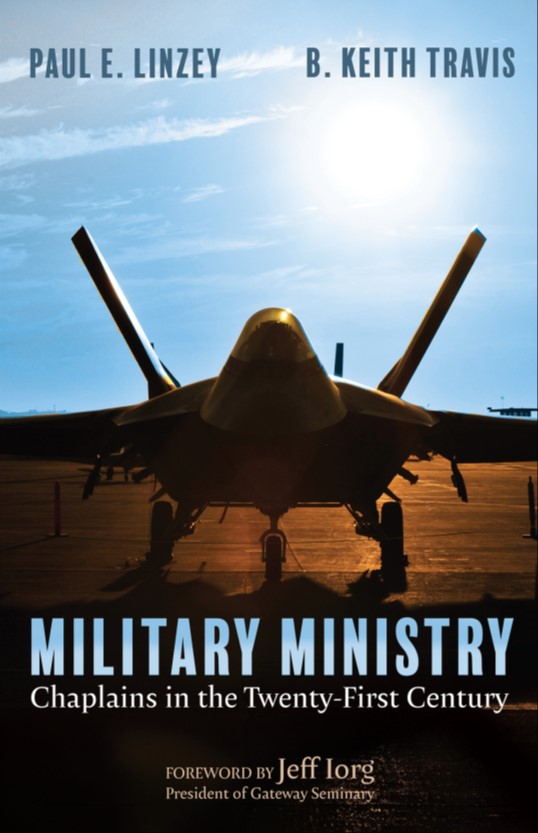
This book focuses on the role of the chaplain, but also takes a good look at religion in the Armed Forces. It answers a lot of questions about the rights and restrictions applicable to people of faith, and presents an accurate picture of what it’s like to be a Christian in today’s military. Containing a lot of anecdotes and real life examples, it also shows that there is an open door for genuine sharing of faith when done correctly and respectfully. Click on the book to see it on Amazon.
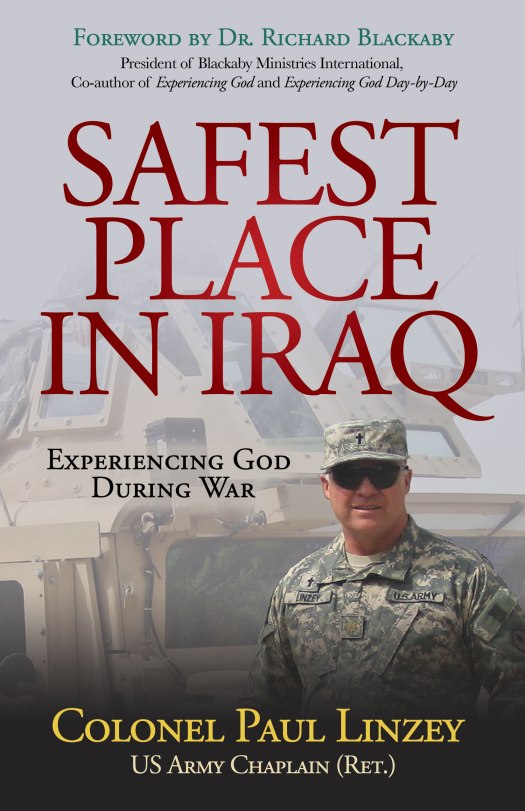
Being in Iraq in 2007 was scary and dangerous. Yet, the Lord was doing some fantastic things in the lives of the men and women I served, loved, and ministered to. Written as a combination memoir and testimony, it tells stories of answered prayer, overcoming fear and temptation, and experiencing the presence of God.
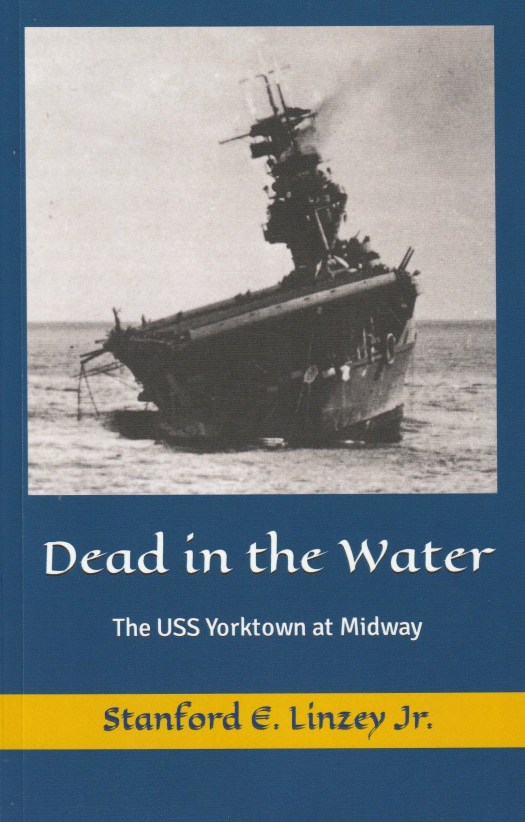
My dad wrote this book about what it was like to be on the USS Yorktown in World War II. He survived the Battles of Midway and Coral Sea, experienced the amazing presence of the Lord during the toughest days of his life, and shares what it was really like. Originally published with the title God Was at Midway and then as USS Yorktown at Midway, last year my brother wrote a new introduction and I added an epilogue.
These books may be purchased on Amazon by clicking on the images of the books. You may also click on the Books tab in the menu above. And if you’d like to listen to my podcast conversations with Richard Blackaby (Blackaby Ministries International) or with Randy Zachary (Family Radio) scroll down to the bottom right and you can play them.
Before he became our first president, General George Washington was keenly aware of our need for military chaplains. He understood that chaplains, through their life, influence, and preaching, could help his men morally and ethically. He knew the impact chaplains would make by instilling courage and discipline. And he wanted chaplains to counsel the soldiers, visit them when they were sick or wounded, honor the dead, and write letters home for those who could not write.
Apparently, the Founding Fathers didn’t question whether a military chaplaincy was needed. It seems they merely adopted the British practice without debate. On July 29, 1775, the Continental Congress authorized a chaplaincy for the Continental Army and decided that the chaplains would be paid. In 1777, they authorized a chaplain for each Army brigade. By 1791, the First Amendment of the U.S. Constitution was ratified, guaranteeing freedom of speech and freedom of religion for every citizen, including people serving in our military.
These early actions by the United States Congress in the late 1700s served as the legal foundation and paved the way for further refinements as we shaped the military chaplaincies. When he was a congressman, James Monroe had voted in favor of a military chaplaincy on several occasions. Then as president, in 1814, he signed the explicit authorization for military chaplains. In 1818, a chaplain was authorized for the U.S. Military Academy at West Point. In 1838, congress passed more sweeping legislation providing military chaplains at frontier forts, military hospitals, and other military schools. Also included were chaplains for the Navy and for Congress itself. By that point, the legal grounds for a military chaplaincy were firmly in place, and they endure to this day.
In 1861, Congress directed military commanders to weed out undesirable or unqualified chaplains because not everyone serving as a chaplain was qualified or was behaving properly.
It wasn’t until 1917 that Congress authorized minority faith groups to have military chaplains. Previously, all chaplains were Christians, the vast majority being Protestant. This new legislation, however, allowed Jewish rabbis to serve as military chaplains, and eventually let representatives of other minority religious groups serve as well, such as Buddhists and Muslims.
Following WWII, the Geneva Convention established the Law of Armed Conflict, which designated chaplains as noncombatants who are not allowed to fight, and who should be protected during battle. The United States was one of the first to sign the agreement to the Geneva Convention guidelines.
By 1956, Title 10 of the United States Code had been approved. This important legislation significantly expands and identifies the roles and functions of military chaplains. Because of the scope of this legislation, anyone interested in the military chaplaincy should read it thoroughly. According to Title 10, the military will fund and maintain a military chaplain corps and retain chaplains.
There have been some significant policies, instructions, manuals, pamphlets, memos, and regulations prepared by the Department of Defense and the various military departments that shed light on the role, function, and tasks of military chaplains.
Chaplains have to know the law. They’ve got to understand current policy, and must build a good working relationship with the commander and command staff, as well as with officers, enlisteds, and NCOs. All commanders are well trained and knowledgeable when it comes to issues related to religion. However, some of them are “anti-religion,” while some go overboard promoting religion. Others don’t care at all about religion, and want to take funds earmarked for religious programs and use the money for other priorities. Therefore, chaplains have to be well informed and strong enough to tell commanders what is right or wrong when it comes to implementing their religious programs.
If we do our homework and maintain proper relationships, we have an open door for an incredible ministry and an opportunity to impact countless lives on behalf of the Kingdom of God.
Throughout most of the twentieth century, understanding the Constitution and how it affected the work of chaplains didn’t seem all that important. Today, however, it is imperative for every chaplain in the Armed Services to fully understand the Constitution, the Establishment Clause, and the Free Exercise Clause because there is so much at stake.
The Establishment Clause prohibits the government from creating an official state religion. Although the precise definition of “establishment” is unclear, historically it referred to government-sponsored churches or religions, such as the Church of England, or any of the other officially recognized national religions throughout the world.
Congress shall make no law respecting an establishment of religion or prohibiting the free exercise thereof.
The Free Exercise Clause, on the other hand, extended religious protection to individuals, giving them the right to practice the religion of their choice without fear of punishment or negative consequences.
Although the Constitution deals with religious freedoms for all citizens, it doesn’t specify or authorize a military chaplaincy. Our government and military leaders have decided that having military chaplains is the best way for the constitutional rights and privileges of military personnel to be guaranteed, implemented, and supervised.
In essence, citizens of the United States don’t lose their constitutional rights when they enlist or become an officer in the military.
There have been many challenges to having chaplains in the military and there will be more, but each case inevitably comes back to the Constitution’s Establishment Clause and Free Exercise Clause. In a nation where people of many faiths live side-by-side, the First Amendment’s free exercise clause protects individuals from government interference in the practice and expression of their faith. The government cannot target laws at specific religious practices or place undue burdens on its citizens who want to worship.
Constitutional authority travels in a direct chain of command: from the Constitution, to the President, to the Secretary of Defense, to the Pentagon, to the Branches of Service, on down to the unit Commanders. The chaplain is the commander’s personal staff officer who is delegated the task of implementing and supervising the constitutional religious freedoms, restrictions, and opportunities. In essence, the religious program in the military belongs to the commander, and the chaplain works for the commander to make sure it is done properly and legally. That’s why every chaplain must understand the constitutional issues.
An important consideration to keep in mind here is that it’s the government that is specifically limited by the constitutional amendment. Because religious freedom is an important part of our national values, the government isn’t allowed to restrict those rights or to infringe on the individual’s free exercise of religion. Nor can the government impose religion onto the individual. This is particularly relevant to commanders and chaplains in the military.
The commander has legal and constitutional authority; the chaplain is the subject matter expert who provides ministry for those of his or her faith group, facilitates meeting the religious needs for those of other faith groups, and ensures that all personnel have the opportunity to practice their constitutional freedoms. And because of the Establishment Clause, the chaplain also makes sure nobody is coerced or forced to worship, and that nobody is subjected to presentations of religion against his or her will.
It’s important to note that the Constitution is the authority that gives chaplains the right to express their faith in a secular and pluralistic environment. But it also provides limitations that chaplains must respect. Otherwise, it is possible for chaplains to find themselves caught between the Establishment Clause and the Free Exercise Clause.
These clauses were written into the constitution to protect churches from government, and also to protect individuals from religion, because freedom to worship also includes freedom not to worship.
Christians have freedoms, yet so does everyone else in the Armed Forces, and those freedoms are guaranteed. Chaplains have a crucial role in how religious rights play out in the military, and we need to know our role.
The background of the word “chaplain” provides an important lesson about care giving. The word itself traces back to Bishop Martin of Tours. According to tradition, in the fourth century, while he was still a young soldier, Martin shared his cloak with a beggar. The cloak became a reminder of this simple act of compassion and kindness. Martin later became a bishop, and upon his death, his cloak (capella) was enshrined as a reminder of his compassion for a fellow human being.
Centuries later, Charlemagne appointed priests to care for his relics. One of the relics was believed to be St. Martin’s cape, and the priests became known as the “cappellani,” or “keepers of the cape.” The cape and other relics were housed in a small room connected to a cathedral, and the room itself was termed the “capella” or “place of the cape.” This came into English as “chapel.” Gradually, the term “chapel” came to mean a small place for worship or prayer other than the main church, and a priest who served in a chapel was called a “chapelain” in French, which is the immediate source of the English word “chaplain.”
Today in America, a clergy who ministers in any context outside a traditional congregation may be called a chaplain. There are chaplains serving in hospitals, prisons, and corporations. Police and fire departments may have chaplains. There are chaplains ministering to truckers and motorcyclists. Others may be found at rodeos, fishing tournaments, campgrounds, and many other places where people gather. Similarly, someone who provides religious ministry for military personnel is typically called a chaplain, regardless of the faith group he or she represents. Interestingly, many service personnel call their chaplain “Padre,” which is the Spanish word for “Father,” and comes from the Catholic tradition.
The above is an excerpt from the book, Military Ministry: Chaplains in the Twenty-First Century, by Paul Linzey and Keith Travis. Wipf & Stock Publishers, 2022.Paul and Keith were military chaplains who now teach and write.
The outer door of my office building opened, then slammed shut, followed by the sound of boots clomping down the hall, until they stopped at my door. I looked up to see Father Wlad dressed in camouflaged cargo-pocket shorts that reached below his knees, a faded pink-and-green floral buttoned shirt, greenish-brown combat boots that had seen better days, and thick, dark green, used-to-be-knee-high socks that had lost all elasticity so that they drooped down to the tops of his boots. His left hand held a table tennis racket. I burst out laughing at the apparition that filled the doorway.
“Want to play ping pong?” the priest asked.
“I’d love to,” I managed to say, mentally rescheduling the tasks on my to-do list. I had been praying about Father Wlad the past few days, hoping for an opportunity to spend some time with him. He was faithful in his ministry as a Roman Catholic priest, conducting daily mass and confession, yet I sensed he needed a friend, just like I did.
We chatted as we walked over to the MWR, which was a combination gym and entertainment facility. The bottom level had weight machines and free weights. There were treadmills, stair climbers, ellipticals, and stationary bikes. The floor was concrete, and one side had a large, bright blue mat for floor exercises. Upstairs were pool tables, a stereo, books and magazines, card tables, sofas, and a humongous internal-projection big screen TV. In the center of the large, open, linoleum-covered area was a brand new, heavy-duty ping pong table. Father Wlad had planned this ambush, and had asked the MWR staff to reserve the table for our use.
“You never told me you play table tennis,” I scolded.
“Table tennis is big in Europe. Everybody plays.”
“Do you have a table in your parish hall in Poland?” I asked.
“Of course.” It was like he was saying, “Silly American. Don’t you know anything?”
Had I known there was to be a table tennis match today, I would have dressed for the occasion. I would love to have changed into my PT clothes. Instead, I was wearing my Army Combat Uniform with boots. What I wanted most was to be wearing athletic shoes.
Not having the right clothing wasn’t my only worry, though. Europeans don’t consider table tennis to be a casual game; it’s a serious sport. Father Wlad had brought his personal racket when he came to Iraq. I had to use whatever the MWR happened to have on hand, which wasn’t as good as the equipment I used at home. Not only that, Wlad was left-handed, which presented a different set of dynamics to the game. This could get ugly.
We took about ten minutes to warm up, batting the ball back and forth to get a feel for each other’s style of play. News spread quickly that the two chaplains were playing ping pong: Catholic versus Protestant, Polish versus American, Lefty versus Righty. By the time we began the first game, an audience of about twenty-five people had gathered to witness this international, interdenominational slugfest. They shouted, egged us on, and groaned or cheered with every shot and every miss.
The first player to 21 wins, but he has to win by at least two points. Father Wlad won the first game with a score of 21–10. It took me that long to figure him out—and to remember the coaching I had received as an 18-year-old freshman at San Diego State. An encounter with my cousin, Elmer, flashed into my mind.
Elmer, who was eight years older than I, invited me to have dinner with him and his wife, and while we were eating, he asked, “Do you play ping pong?”
“Sure.”
“Are you any good?”
“Yeah, I’m pretty good. Why?”
“Well, I just bought a new ping pong table, but I’ve never played. S’pose you could teach me? Maybe show me a few things after dinner?”
“Sure. I’d be glad to.”
After eating, we went out to the garage. I should have known as soon as we walked in that I was being set up. Brand new table, prominently placed in the center of the room. A rack on the wall held ping pong balls and paddles. Chairs for spectators along each side.
“Pick any paddle you want,” Elmer graciously offered. Then he pulled a case from the shelf and took out his personal racket that nobody else was allowed to use . . . or touch . . . ever!
“So, how do you play this game?’ he asked.
After I gave a few of the basics, we got started. We played ten games, and I never scored a point. He skunked me ten times in a row, right after I told him I was pretty good.
“OK, cousin. I know two things about you. You’re a great ping pong player and a good liar.”
After he stopped laughing, he said, “Don’t ever call it ping pong, Son. It’s table tennis. And this is not a paddle, it’s a racket.”
“OK. Where did you learn to play . . . table tennis?”
“I played in the Army, competed in the Servicemen’s Table Tennis Tournament in Germany several years, and even won the thing once.”
My cousin was a champion–a champion who apparently delighted in taking advantage of his naïve, overconfident, younger cousin. I learned later that he enjoyed pulling this prank on many of his friends.
“So Elmer, s’pose you could teach me? Maybe show me a few things?”
“Sure. I’d be glad to.”
During the next few months, he taught me how to play the game: the rules, the etiquette, technique, how to return spin with spin, keep the ball rotating the same direction, unless, of course, you decide to override the rotation of the ball with power. Never touch the table. How to serve. The thickness of the rubber on the racket. The guy knew the game inside and out, and under his tutelage, I became a much better player.
As Father Wlad started serving game two, suddenly, his serve, his spin, and his leftiness were not insurmountable. I won the second game 21–18. I also won games three, four, and five—each game by two or three points. The final game was long, going back and forth, neither of us able to get a 2-point lead for the victory until finally I beat him 32–30. We were exhausted. The Polish Catholic priest took the first game by 11 points. The American Protestant pastor took the next four games by a combined total of 10 points. So, he had more points, but I had more games. The fans cheered for both of us.
“Let’s go back to my place for drinks,” my opponent suggested.
“Sounds like a great way to spend an afternoon in Iraq,” I replied.” Then, thinking that he might only have beer, I asked, “Do you have any soft drinks?”
“Come. I will take care of you.”
The Polish soldiers had built the chapel for Catholic mass and confession, but off to one side of the wooden structure, they added a large office and Father Wlad’s living quarters. While I lived in an aluminum can, my compadre had a 600-square-foot, two-room apartment, complete with running water and a refrigerator. They knew how to take care of their priest.
Wlad went straight to the fridge, pulled out a beer for himself and a Diet Dr Pepper for me, smiling as he handed it to me. “See. I told you I take care of you.”
I was impressed. Father Wlad had taken time to plan this day. The little store at Camp Echo didn’t have my favorite drink very often. I had asked the manager if he’d order some Diet Dr Pepper once in a while, and he agreed. Whenever it was in stock, I bought a 12-pack or two. Wlad had gone over to the shop a week earlier to pick some up, knowing that’s what I liked. He lit a cigarette, put his feet up, and we spent the afternoon talking like old friends getting together for drinks at a roadside café somewhere in Europe.
(This story is excerpted from chapter 12 of my book, Safest Place in Iraq.)
My first Sunday at the FOB in Iraq was Palm Sunday, one week before Easter 2007. Eight people showed up for church that morning: a civilian I called Pastor James, four American soldiers who had been meeting with him faithfully for the past year, my Chaplain Assistant, one new guy, and me. It was easy to see that the soldiers respected James. He had been there for them, and they loved him. My sermon was based on Mark chapter eleven, “Blessed is he who comes in the name of the Lord.” We finished worship having communion together, Pastor James and me side-by-side.
After I thanked everyone for coming and was about to dismiss the small group, a stranger in a Ukrainian army uniform walked into the chapel unannounced and proclaimed, “I have something to say.”
He had an excellent command of English vocabulary, but with a heavy accent. He was an attractive, friendly man, about 6′ 2″ with short hair, heavy eyebrows, and green eyes.
“I am not a Christian. Several months ago, I started having problems with my eyes. I went to the doctors here in our medical clinic. They told me I had an incurable eye condition. They brought in a specialist who confirmed the diagnosis. He said there was nothing they could do for me. No treatment. No medicine. No surgery. He said my eyes would gradually get worse until I was totally blind. Last Sunday I came here and asked the men if they would pray for me.” He pointed to James and said, “That man put his hands on my head and prayed. These other guys put their hands on me and prayed too.”
“The next day, last Monday, I could see better, so I went back to the clinic. The doctors did the same tests all over again. This time, they said I don’t have that disease. I have been back to the clinic to see the doctors almost every day this week. Your God healed me. I am not going to lose my eyes. I am so happy. How can I become a Christian?”
You could hear the sounds of surprise and amazement from the small congregation, especially from Pastor James and the men who had prayed with him the previous Sunday. In simple terms, I explained who Jesus was and what it meant to receive him as Lord and Savior.
I wasn’t a part of the miracle of healing that he experienced the previous week. Pastor James and the others had prayed for him. But on my first Sunday at Camp Echo, I had the privilege of praying with this man, a captain in the Ukrainian army, as he asked Jesus to come into his heart. The feeling among our little group was incredible.
The Ukrainian brother came alive. Every time I saw him, whether walking down the street, sitting in the DFAC, or attending a staff meeting, he hugged me, told me how thankful he was that Jesus healed him and saved him. And then he’d say, “We have to tell people about Jesus. They have to know him.”
The rest of the story may be read in the book Safest Place in Iraq. You may click the Books tab above or order it through any bookstore.





 Paul Linzey