Training Ukrainian Chaplains

Because of political turmoil and the war in Ukraine, this is a critical moment in Eastern Europe. Recognizing the need for pluralistic chaplain ministry in its armed forces, the Ukrainian military created a brand-new chaplain corps that was approved by the government in 2022 and officially started in 2023. Ukrainian leaders are now looking for outside help to train and educate their chaplains.

Video Link: Click here to Learn More

There’s a Theological Seminary in Poltava, Ukraine with an outstanding reputation and the military has asked the school to provide training and education for their chaplains. The seminary reached out to the Chaplaincy Department of the General Council of the Assemblies of God to help provide that training, and they asked us to put a team together.
The seminary is asking for a three-year educational training plan that will encompass theology, practical aspects of military chaplaincy, and specialized topics that will prepare clergy for what they may experience as military chaplains in Ukraine.

Our team is prepared to teach and train Ukrainian chaplains in a wide range a specialties and skills.

The Armed Forces of Ukraine has committed to send their chaplains to the Poltava Theological Seminary for six classes per year for the next three years. With our experience and expertise, we can provide what their chaplains need, but because of the war, they can’t pay our expenses to get there.

And they don’t have the means to purchase or create a curriculum. This means we have to raise the money, and we estimate that it will take $24,000 per year to train the chaplains.
This will cover our travel expenses, classroom materials and supplies, and the curriculum that we will prepare and leave with them for continued use. After three years, they will have enough chaplains complete the program that it will then be self-sustaining and our job will be done.

The long-range goal is to raise $72,000 for a three-year training cycle, but our immediate goal is to raise $24,000 for the first year. Contributions are tax deductible through the Illinois District of the Assemblies of God.

The motto of the chaplains of the Armed forces of Ukraine is “Being There.” That is their mission, and they are fulfilling that calling even through some pretty tough situations and bleak conditions.

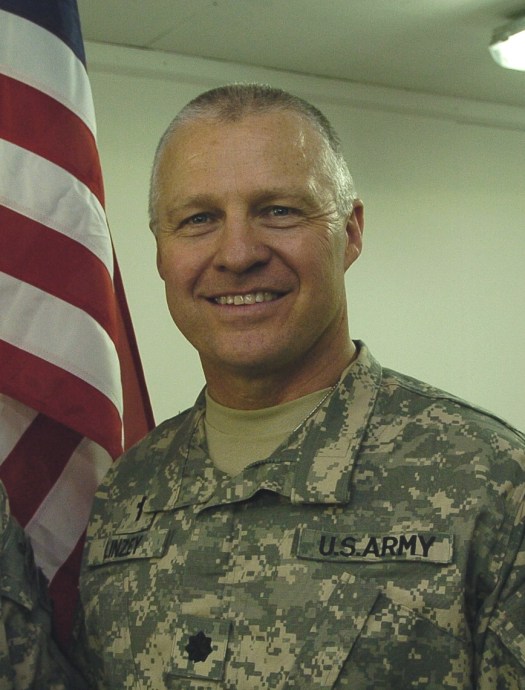
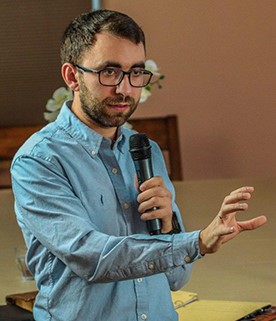
Top Row Left to Right: Paul Linzey, Manny Cordero, Vince Lambert. Second Row Left to Right: Josh Andrew, Sharon Ackerman, John Michno

John Michno completed the MDiv at Fuller Theological Seminary and became a military chaplain. After retiring from the military, he pastored in Ukraine and Russia. He is Ukrainian American, speaks Ukrainian and Russian, and is a missionary with the National Slavic District of the Assemblies of God.

Dr. Sharon Ackerman is a hospital chaplain with experience as an educator, pastor, sociologist, and missionary. She has worked for human rights and religious freedom for women and persecuted Christians, and is the author of several books. She has graduate degrees in religion and sociology and two law degrees from Cornell Law School.

Joshua Andrew is a former Army chaplain. He has served over 17 years as a pastor, educator, and a military chaplain in both combat and humanitarian roles. He holds an MDiv in Theology and a PhD in Education.

Dr. Manuel A. Cordero is the Senior Director for U.S. Chaplaincy Ministries for The General Council of the Assemblies of God.  He has been in chaplaincy ministry for more than 44 years, originally working with the Federal Bureau of Prisons for nearly 24 years.

Vince Lambert is a senior military chaplain who spent a year in Ukraine training volunteer military chaplains. He has an MDiv with additional graduate work towards a DMin, and is the author of the devotional book, 30 Days Ablaze.

Dr. Paul Linzey is a retired military chaplain with war-time experience. He has trained U.S. and international chaplains, and now teaches at a Christian college. He has written two books about chaplain ministry.

John Michno and Paul Linzey are co-team leaders for this project.

It didn’t take long after Russia invaded Ukraine for the Ukrainian government and military to realize they needed full-time, professional chaplains in the Armed Forces of Ukraine. Historically, Ukraine depended on volunteer clergy to serve the military. This is a huge development. But along with it came the decision to open the chaplaincy to clergy from multiple faith groups, so they are moving towards a new pluralism and diversity.

Now that the foundation is in place, the next step is to provide the professional training and education the chaplains need, which is why they reached out to the Poltava Theological Seminary, who in turn asked us to partner with them for three years.

Our team has the education, the experience, and the expertise to accomplish this mission. What we need is the financial backing of people who care, who understand the immediacy of the open door in Ukraine, and who want to do something about it.

Igor Skrypnichenko is the Vice President of the Poltava Theological Seminary. Because some of his graduates are now chaplains doing great work among soldiers, he has been asked to train new chaplains. It is largely because of Igor’s compassion, excellence, and tireless hard work that he has developed a rapport with Ukrainian leaders, and why they want him to head up chaplain training. But just like the rest of us, Igor has only twenty-four hours in a day, and is spreading himself too thin.
When Igor reached out to the Chaplain Department of the Assemblies of God, they asked John Michno and me to put a team together. As you can see above, the chaplains we have assembled for this project are outstanding.

There are several ways you can help us. First is to pray. The war is still going on, and February 2024 will begin the third year of the current conflict. Pray for peace. Pray for the people who have lost everything. And pray for safety, wisdom, and discernment for us. Another way you can help is to support us with your giving. We are preparing six classes per year. Each class requires a teacher to create the curriculum, travel to Ukraine, and provide materials and supplies.

You may send donations by mail to:

Or give online at IDCAG.ORG. You are welcome to designate a donation to me or specify any member of the team. You may also give an undesignated contribution that we will share.

Thank you so much for your generosity. We really cannot do this without your help.

33% Off Sale Through September

From now through September, my book Butterfly Believers, costs only $10 instead of $15, both on my website and on Amazon.

Inspired by a study of Romans 12:1-2, Butterfly Believers consists of forty devotional readings, each one based on one aspect of the butterfly life cycle. In the same way a butterfly changes every single day, Butterfly Believers are also transforming continuously, moving towards spiritual depth and strength.

The author presents forty specific facts about the egg, caterpillar, chrysalis, and imago, adding one or two appropriate scripture verses. The result is an inspiring devotional about moving step by step towards maturity, and blossoming into the beautiful Imago Dei.

There is never a day when a butterfly in any stage is the same as it was the day before. This is also true of people. The author uses metamorphosis as an analogy, breaking down the steps to personal growth, making it easier to understand, and making the process interesting and fun.

God Speaks through Our Stories

The message below was sent to me via Messenger from a minister in Kansas who could relate to some of the stories in our book on Military Ministry. His name is Sean, and he gave me permission to share it.

“I am a seminary student and was just selected to the Army Chaplain Candidate program. During my studies, we read your book on Military Ministry and God spoke to me through your testimony. My grandfather was a SeaBee and both of my brothers were in the Navy, with the one I’m closest to retiring as a Chief Petty Officer. My whole life I have wanted to join the Navy but because I had asthma in high school I was unable to join. In adulthood, I have been healed of it and had my plans set on becoming a Navy Chaplain. I’m the Reserves, as that was my wife’s agreement.

When I read in your book about the similar situation you faced, God began speaking to me about whether I was willing to shift course and follow where He needed me rather than where I wanted to be. The Navy would not grant me the medical waiver needed, but now I am getting ready to begin ministering as an Army chaplain. I wanted to say thank you for your service, your willingness to follow God, and the inspiration I received while reading about your experiences. God bless!”

Who might God want you to tell your story to?

Your Book Was the Perfect Addition to My Research

The following is a from an actual email that my co-author (Keith Travis) received from a minister doing his doctoral research. Keith and I are grateful for the reception the book is getting from people in churches, universities, seminaries, and the military.

“When a friend recommended your book, I bought it that day and have to say, I believe it was truly providential.

My research needed a little more meat on the bones, and your work has been the perfect addition. The practical nature of the insights into actual ministry have made your book like the perfect spice added to a bland, theoretical roast that turns it all into a great meal. I have enjoyed it thoroughly.

I could not be more thankful for this book coming to my desk at the perfect time. Just wanted to drop a short line to introduce myself and let you know how much I have enjoyed and appreciated your book.”

Maturity Requires Patience

In warm, tropical areas of the earth, a caterpillar might emerge from the egg just two days after it was placed on the host plant, but in the colder, northern parts of the world, such as in the Arctic regions, it takes longer. The variations of time often have to do with the temperature. But if it survives, whether a caterpillar was in the egg 3 days, 3 weeks, or 3 months, the end result is the same. A voraciously hungry caterpillar bites and claws its way out and starts eating whatever suitable vegetation it can find so it can build up the bulk and stamina it’s going to need later on.

There’s an important lesson here for Butterfly Believers who live in an era of instant gratification. When we want something, we usually want it right now. But spiritual growth takes time. Personal maturity requires many years. Building a lasting relationship, whether with another person or with God, doesn’t happen instantly. So we have to be patient, persistent, and faithful.

Every college football player has the dream of getting into the NFL and being a smashing success right from the beginning of the rookie year: starting every game, being in the playoffs, winning the championship, making big money, receiving the MVP trophy, everything. The reality is that it takes most players several years to reach their peak. After years of working hard, maybe with a couple of injuries and failures, they finally get to the place of consistent, high-level performance . . . if they last long enough in the league.

The same is true in our walk with the Lord. We have high hopes. We want to be mature and spiritually deep. We feel an urgency to participate in ministry. But the sometimes-painful truth is that we might not be ready for that yet, which is why James said Not many of you should become teachers (James 3:1) and Paul wrote that a leader in the Kingdom of God must not be a recent convert (1 Timothy 3:6).

There’s another reason for being patient. When we try to rush the process, we tend to set ourselves up for failure or disillusionment, and this can be devastating, leading many to drop out of church or give up the faith entirely.

In the same way caterpillars have to be patient and hatch at the right time, and just like athletes have to develop skills over time and earn a starting spot on the team, Butterfly Believers will focus on the Lord, allow spiritually mature brothers and sisters to provide discipleship and mentoring, not pretend to be more mature than they really are, and not try to take on leadership responsibilities too soon.

The above is an excerpt from Butterfly Believers, one of several books that may be perfect for individual reading or group discussion. My wife (Linda) put together this jigsaw puzzle that shows a variety of mature butterflies.

A Chaplain’s Accountability to the Church and the Military

It’s important to know that a clergy entering the military as a chaplain or chaplain candidate will have several lines of authorities to answer to. First, of course, is the military chain of command. The chaplain always works for the commander as the commander’s personal staff officer. In this way, every chaplain is held accountable to military standards, in addition to having an opportunity to offer moral, ethical, and spiritual input. Second, the chaplain works for the installation chaplain or the next higher command chaplain. In other words, the chaplain has a technical chain that begins with a senior supervisory chaplain and goes directly to the Chief of Chaplains, ensuring that every chaplain is held accountable to Chaplain Corps standards and methodology. Third, the chaplain has an endorser or denominational “chain of command.” This relationship ensures that the chaplain maintains the theological and lifestyle standards as a representative of his or her faith group.

When you serve as a military chaplain, make it a priority to stay in touch with your church, faith group, and endorser. Send in the reports on time. Live up to your ordination vows. Pay your tithes or dues. If your endorser or faith group doesn’t require these actions, consider doing them anyway. It’s important for you as a chaplain to remember your roots. The chaplain comes from the church and will more than likely want to return to church ministry at some point. So, you can’t afford to lose touch with your denomination. Communication is crucial.

One of the ways many endorsers and denominational offices attempt to stay in touch with their chaplains is by asking the chaplains to send a monthly, quarterly, or annual report. Too many chaplains won’t submit the requested information. Here’s a hint: make up your mind from the start that you will send whatever report they ask for.

But the communication between chaplain and endorser has to be a two-way street. In today’s ever-changing environment in the military, it is extremely important that chaplains and endorsers communicate regularly. There are many ways this communication can take place. Some endorsers conduct periodic Zoom/FaceTime/WebX/Google meetings with their chaplains. Many send out newsletters, while others use social media to connect with chaplains, and chaplains with endorsers. We have to remember that communication is the key. When we communicate with each other, we provide a layer of accountability that endorsers and chaplains need in their ministry.

Another crucial concept is that although culture changes, the Gospel does not. Ministerial methods may change, but the message we are trying to communicate to those we serve does not change. The endorser provides leadership for those representing the church in the military, and chaplains need to walk within the guidelines of their particular faith group.

From the book Military Ministry: Chaplains in the Twenty-First Century by Paul E. Linzey and B. Keith Travis.

Ministry in a Cultural Context

Every chaplain already has the required ministerial experience, education, and other qualifications, so the initial officer training is designed to prepare you mentally, emotionally, and tactically for the service you have entered. Each armed service has its own culture, worldview, and language, and these are important. Therefore, chaplains must get ready to live, work, and minister in that environment. There are some cross trainable tasks for all of the Armed Services Chaplaincies, but the important thing is that you learn these tasks best within the backdrop of the service God has called you to.

When I was a rookie chaplain, my first chaplain mentor said to me, “Here’s my philosophy of serving as a military chaplain: ministry follows friendship. If you love your soldiers and spend time with them and they know you like them, then they’ll come to you when they want to talk about their spiritual need. Just love them, spend time with them, and trust the Holy Spirit to draw them. When they are ready to talk about the Lord, they’ll know who to go to.”

In the same way pastors and missionaries have to learn the cultural context of the people they’re called to serve, chaplains need to understand the new world they’re going to be living in and ministering in for the next twenty years. You need to know the mentality, the lingo, the expectations, and the dress code. You have to know what you can and cannot do, the limitations of your authority, and the freedoms you have in ministry.

Sometimes, there’s a fine line between behavior that earns a medal, and activity that gets you in trouble, so you have to be able to discern the differences and know who you can go to for guidance and accountability. If you do it right, you’ll set yourself up for a successful career of effective ministry, while meeting new people and making friendships that’ll last a lifetime.

The painting below was by Don Stivers on the 100th Anniversary of the United States Army Reserve. I was assigned to the Chaplains Office at the US Army Reserve Headquarters at Fort McPherson, GA at the time, and bought this print. The picture shows some of the many activities and people that military chaplains have served over the past hundred+ years.

Show Me the Money

Some men tried to set a trap for Jesus one day by asking him a trick question. Is it right to pay taxes to Caesar? They expected a simple yes/no, either/or answer that would force him into a corner and get him into trouble with either the Roman authorities or the Jewish leaders. It would be a win/win for them and a lose/lose for him. But as he often did, Jesus had an interesting reply . . . Show Me the Money!

“Show Me the coin used for the tax.” So they brought Him a denarius.

“Whose image and inscription is this?” He asked them.

“Caesar’s,” they said to Him.

Then He said to them,

“Therefore give back to Caesar the things that are Caesar’s,

and to God the things that are God’s”

(Matthew 22:19-22).

In answering their question, Jesus avoided the obvious either/or, and totally reframed the dilemma. In the eternal scheme of things, it doesn’t matter who you pay taxes to. The real issue is whose likeness is on the coin and whose picture is on you as a person because the image shows the identity of the owner. Since Caesar’s picture is on the denarius, go ahead and return it to him. It belongs to him. Likewise, because God’s image is on you, he claims ownership of your life, so give back to the Lord what is rightfully his. You belong to him.

Jesus’s reply turned the tables on them because they were the spiritual leaders who were supposed to understand the scriptures. They were the ones who claimed to have the image of God. Yet in reality, they were far from God.

Give back to Caesar what already belongs to him,

and give back to the Lord what already belongs to him.

An adult insect is officially called an imago, which means image or picture. This is the stage the butterfly looks its best, is fully developed, and fulfills its purpose. This is the stage that has captured the imagination of people around the world since the beginning of history. And this is where our discussion of the butterfly life cycle comes to a crescendo.

The butterfly is a wonderful analogy of the spiritual growth among Christians because metamorphosis means transformation, and the gradual changes from one stage to the next are so appropriate for a discussion of the changes that take place in our lives. But another fantastic part of the story is that the mature or perfect form of the adult butterfly is called an imago. This is a powerful reminder that every Butterfly Believer was fashioned in the Image of God. Theologians refer to this by using the Latin phrase, Imago Dei.

His image, his likeness, his stamp of ownership is indelibly printed on our soul, our very being, and we have chosen to give ourselves back to him. This is what we were created for. This is our reason for being. This is what empowers us to reach our highest level of existence. This is what we were designed for.

No matter who you are, where you are from, whether you are male or female, or what you look like, you are made in the Image of God and there’s nobody in the world more important or more valuable than you. You are free to be yourself, free to pursue your dreams, free to express yourself, and free to fly. And in that freedom, you can liberate others to do the same. You are a Butterfly Believer. And you are beautiful.

This is an excerpt from Paul Linzey’s book, Butterfly Believers, which is available on this website and on Amazon. It is perfect for home group or Bible study discussion or for personal devotional reading.

Abandon Ship!

I was a young sailor on June 4, 1942, when the USS Yorktown was sunk in the Battle of Midway. We were only three miles from land—straight down! And that is where our great aircraft carrier still rests today as a tomb for some eighty-six of our friends whose lives so suddenly ended on that tragic day.

The best of the American and Japanese navies were in full conflict at the Battle of Midway, and we already had taken three bomb hits. Our hangar deck was in flames from one bomb, another had set fire to our fourth deck, and a third had exploded in the stack and blown out the fires in our boilers. We all felt the ominous silence of dead engines as we floated lifeless in the water!

At 2:00 P.M., our engineers had just gotten the ship’s engines started again when the next wave of Japanese attack planes came roaring in and dropped their torpedoes for the kill. That was more than a half century ago, and yet I can hear the agitated voice that spoke over the headphones and loudspeakers as if it were yesterday: “Stand by for torpedo attack!”

I can still close my eyes and shudder at the memory of the thudding of the two torpedoes as they struck us on the port (left) side. I was down on the third deck at water level when they blasted the side of our ship and ripped huge holes in our hull, and I can still remember how the ship lifted into the air with the impact of the explosions. As the water rushed in, the great aircraft carrier listed to the port side at twenty-seven degrees until the very edge of the hangar deck was dipping into the water. Inside the ship, there was nothing like a deck or a bulkhead, for every surface was lying at an angle and making it almost impossible to maneuver from one compartment to another. Water mains were broken and were spewing forth water, and the lights were out. Only the blue battle lamps illuminated the scene.

I will never forget the last command of Captain Elliott Buckmaster. A chill went through all of us as we heard his fateful words: “Abandon ship!”

In the following hectic hours, we struggled for survival. We had little time to think of the many friends we were leaving behind in the depths of the ship. If we were having trouble with a loss of electricity and broken water lines at the third deck, surely the men below us were flooded with little hope of survival. Yet, in spite of the jeopardy of our condition, I recall the disciplined calm among our sailors as we worked our way up through the destruction. Well trained for such a calamity, we helped each other find our way to the surface and then slid down two-inch lines into the oil-covered sea.

History has recorded the battle strategies, the mistakes, the glories, and the tragedies of the war at sea. The Battle of the Coral Sea, in which the Yorktown was first damaged, turned back the southern expansion of the Japanese Empire; the Battle of Midway, where she was sunk, was the turning point of the Pacific War. We look back now and see the entire Pacific Theater of the war from beginning to end—the Japanese expansion in Asia and the Pacific Islands, the attack on Pearl Harbor that brought America into the war, the prisoner-of-war camps, the raising of the U.S. flag on Iwo Jima, the atomic bomb attacks on Hiroshima and Nagasaki, and the signing of the unconditional surrender on the deck of the battleship USS Missouri. Much has been said, written, and documented on film, but what history does not remember is that wars are not composed of the grand battles alone but of the personal challenges, tragedies, sacrifices, and faith of individuals caught up in the greater conflict.

History does not remember that at the very time when the survivors of the Yorktown were fighting for their lives, in the thick oil slick that surrounded the sinking vessel, many individuals and churches in America were praying. My own wife was seized with a deep burden for prayer, and just before the battle, I had one of the most outstanding spiritual experiences of my life. To all that has been written, I am adding my voice to say, “God was at Midway!”

This is an excerpt from the book, Dead in the Water, written by Stanford E. Linzey, and republished with a new introduction by my brother, S. Eugene Linzey, and an afterword by me. It is available on Amazon and on this website. The painting of the ship is by contemporary artist, Richard W. DeRosset.

I Wish I Were Catholic

Celebrating Christ’s resurrection is one of the high points of the year for many Christians, both Protestant and Catholic, and to start the day without mortars made it even better. The sun was shining, but it wasn’t hot yet. We enjoyed the music and I preached on the love of God. At the end of the message, I asked everyone to repeat a prayer of commitment to the Lord. Two people confessed faith in Christ for the first time, and it was an awesome celebration of the Resurrection.

The joy and camaraderie continued as we transitioned from worship to fellowship, with twenty-seven of us going to have lunch together. The DFAC staff had decided to make Easter Sunday a special event, so the entire dining area was decorated in Easter colors and themes: banners, a huge Easter Bunny, streamers, and a special holiday menu. The food was always good, with a lot of options. But today we could select whatever our family’s traditional Easter feast was back home: ham, turkey, roast beef, pumpkin pie. They also brought in a sound system and played music all afternoon.

It was just a wonderful day: worship, celebrating the Risen Lord, fellowship with good brothers and sisters in Christ, great weather, and really good food.

After the last of our group left, I decided to go back to the office. The senior chaplain at Camp Victory required each chaplain to send a weekly report. As I was writing the email around two-thirty in the afternoon, I heard the sirens, so I put on my Kevlar vest and helmet and ran down the hall to go out to the bunker, as shrapnel and gravel pelted the roof of the one-story building. The three explosions were really close.

I ducked into the bunker outside the door, the Colonel and Sergeant Major soon joining me. Just three of us this time. On a typical day there might be more than a dozen of us crammed in there.

After we heard the all-clear signal, I said, “Sir, it’s been fun chatting with you, but if you’ll excuse me, I have to run over to the clinic to see if we have any casualties.”

“OK, Chaps. Let me know.”

“Yes, sir. I will.”

The medical clinic was a buzz of activity when I rushed in the front door. About twenty-five people crammed into a lobby that had only a dozen chairs. Six on one side facing the six on the other side. Not your typical waiting room, this area was mostly a place to drop your gear before going in to see a doc or nurse, or before going in to visit a patient.

“How many?” I asked the guy behind the counter.

“Four so far, Chaplain. No deaths reported as far as I know.”

“Thanks.”

“May I go in?” I asked.

“Sure, Chaplain. Go on in.”

When I asked one soldier how he was doing, he began to mutter, and there were tears in his eyes. I couldn’t understand what he was saying, and assumed he was crying because of the pain. He mumbled something again. Then I understood his words and his tears. “I’m hurt, but my best friend is dead.”

“Your friend is dead?” I needed to clarify, because nobody had mentioned this to me.

“Yes. He was standing right next to me. The mortar landed on the other side of him, cutting him in half instantly. My injuries are nothing compared to what happened to him. He saved my life.”

I rushed out to see the receptionist. “Have you guys heard anything about someone being killed in that mortar attack?”

“No, not yet.”

Just then, a Sergeant Major ran in. I hadn’t seen him before. “Chaplain, we need you to come with us. We have a dead soldier and we have to evacuate him immediately. Are you a Catholic priest?”

Others from the unit started pouring into the clinic. During the next half-hour, more than a hundred people asked the same question, “Are you Catholic? Are you a priest?”

Never in my life did it hurt so much to say I was not Catholic. I wanted so badly to say, “Yes, I am a priest.”

The Soldier who died was the most popular guy in the unit. Many of the visiting Soldiers were Catholic, including him. After the dust and smoke cleared, everyone saw him lying on the ground. They were traumatized. He was, in a way, their emotional and spiritual leader–a devout, godly, personable man who cared deeply about each of them. His fellow soldiers loved and respected him. Now they needed a Roman Catholic Priest.

I conducted a flight-line memorial service as the helicopter crew prepared to take off. The men and women of the unit formed a double line extending from the medical clinic to the evac helicopter, wide enough for the funeral procession to march between the saluting soldiers. It was a tragic, but impressive sight. As the Blackhawk rotors thundered overhead, making it almost impossible to hear, I prayed and committed his soul to God. A Catholic chaplain would have to administer Last Rites somewhere else along the way.

For all Christians, the Resurrection of Jesus Christ is a celebration of life over death, healing after hurting, and overcoming suffering. I had experienced all of it in one day, the good and the bad, and had no idea what the next day or two would bring.

This is an excerpt from my book, Safest Place in Iraq, which is available from any bookseller or from this website.