
After I completed the Army Chaplain Basic Course, my first assignment was with a medical unit. While participating in a field training exercise at Camp Parks in California, I met with the First Sergeant one day, and he told me that one of his Soldiers died. When I asked who the soldier was, he told me the name of the guy was “Otto.”
Well, I knew Otto was the name of the alarm clock dressed in an Army uniform. Instead of a bugle playing Reveille first thing each morning, the First Sergeant held a microphone up to the clock to wake up the troops. When the alarm sounded, a Drill Sergeant voice shouted, “Rise and shine, you sleepyheads, Rise and shine!” Somebody got tired of hearing that stupid clock shout “Rise and Shine,” so he made a noose and strung up poor Otto between two field tents. There he was swinging in the breeze.
“What do you do when a Soldier dies?” the First Sergeant asked.
“I would do a funeral,” I answered matter-of-factly.
“Would you?” His eyes got real big.
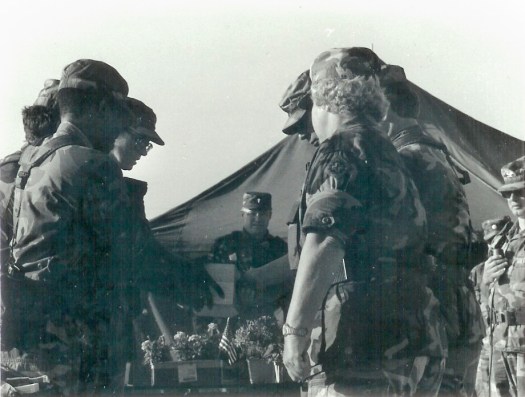
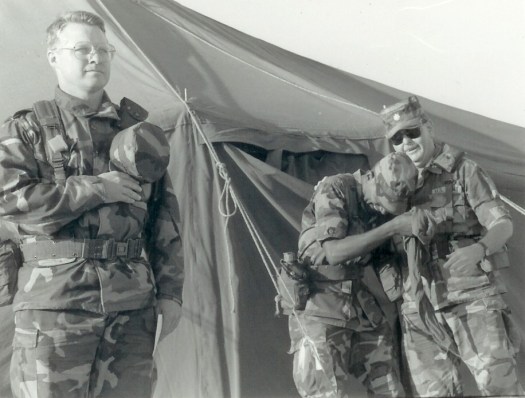
Two days later, still out in the field on the back side of an Army training base, we had a funeral complete with full military honors and protocol . . . for Otto the Clock. One of the Soldiers was a carpenter. He used scrap lumber to build a scale model replica of a coffin. Six Soldiers served as pall bearers, marching in step as they carried the coffin to the ritual. The Colonel gave the commander’s speech. The First Sergeant provided a tearful eulogy. And the Chaplain’s funeral sermon was a poem about time. Each of us is allotted a certain number of days, and when our time runs out, we’re called to give an account before the Great Clockmaker in the Sky.
A hundred Soldiers laughed so hard they literally fell out of formation onto their hands and knees in the dirt. Some of them pretended to howl and cry, others had actual tears because they were laughing so hard.
My college and seminary professors and ministerial textbooks didn’t cover funerals for clocks, and homiletics classes never trained me to write sermons as poems, but that event created a rapport with the Soldiers better than anything I could have planned. For the rest of my time with that unit, I had an open door of ministry.
Actual pictures of the funeral. Click here to read the poem.

 Paul Linzey