Happy New Year & God Bless

Dear Friends,

When Linda retired in 2024, we moved to North Carolina to be near our kids and grandchildren while pondering what might come next for us. We knew we’d be there just for a year. But what a wonderful year!

It was fun spending time with family on birthdays and holidays, playing miniature golf, dropping in for dinner, going to cross country meets, band concerts, dance recitals, and graduations. We went to church with them from time to time and visited our sons’ job sites: one in the Army at Fort Bragg, the other in the Navy at Camp LeJeune.

And of course, we took time to visit our son and grandsons in Colorado, followed by a family reunion at the United States Military Academy at West Point. Our son began his military career there twenty some years ago and retired there this year, the day before his son started his military career as a West Point cadet.

We were able to explore North Carolina from the mountains to the coast. We visited the Biltmore Estate and toured Asheville and the surrounding area that was devastated by Hurricane Helene. We explored the Outer Banks, home of the Wright Brothers flights at Kitty Hawk and the Cape Hatteras Light House. We experienced museums, botanical gardens, aquariums, and state parks.

We spent time in Raleigh, Charlotte, and Wilmington and visited friends in Maryland, Virginia, South Carolina, and Georgia. Linda and her sisters met in Iowa, then went to The House on the Rock in Wisconsin for their annual sister trip. We went to Texas to visit with Paul’s cousins. It really was our first rodeo!

In July we decided to return to our home in Florida. The house needed some major cleaning, painting, repairs, and remodeling, so we’ve been pretty busy the past few months. But it feels good to be back. We’ve already started reconnecting with friends, colleagues, and students. Last weekend, Linda hosted a group of former students for an afternoon tea, much like they experienced during their annual study abroad trips to England.

Paul is re-engaging in the Florida writing community, which was a big part of his life a few years ago, and starting a new book. Thanksgiving was at Camp LeJeune, and we stayed a few days longer for our son’s promotion.

Then just last week, we realized this was our 50th Christmas together.

We want to keep in touch because friends & family are important to us, but we don’t have complete contact info for everyone. Would you send us your address and contact information. You may use the contact page in this website or you may use Messenger. We love you and hope the new year brings good and amazing experiences your way.

Happy New Year & God Bless

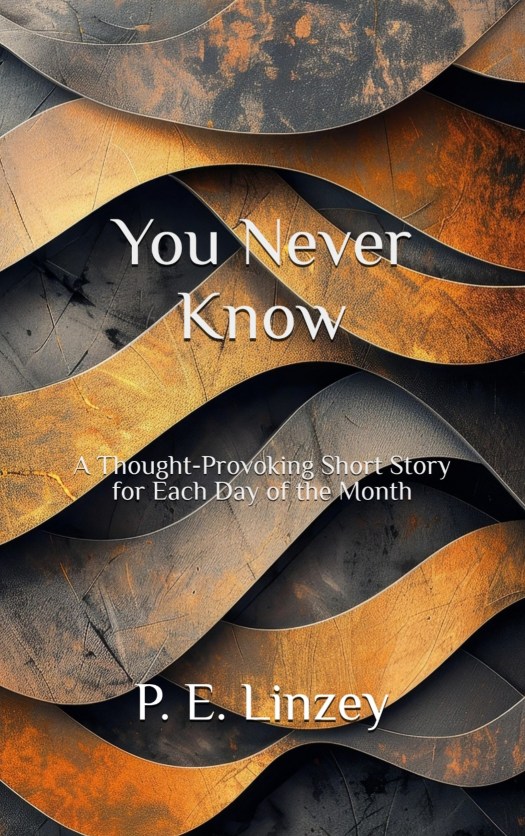
You Never Know

After the symphony came to a crescendo and the program concluded, the visiting violin soloist took a bow, received her bouquet of roses, and approached the microphone.

“Thank you, ladies and gentlemen. Thank you so much for your kindness. Thank you for being here tonight. It is an honor to accompany your symphony orchestra for this performance. And one more thing. I want to thank Ms. Alberta Carter for being here. Today is Ms. Alberta’s one hundredth birthday. Happy birthday, Alberta!”

The audience broke into another round of applause, and as they headed towards the exits, a reporter approached Ms. Carter.

“Ms. Carter, may I ask a question or two?”

“Certainly. What do you want to know?”

“I am covering this event on behalf of the local television station. How do you know Samantha, the guest violinist?”

“Do you mind if I sit down to tell you the story?”

“Not at all. In fact, I will sit down, too. If you don’t mind.”

“How do I know Samantha?”

– – – – – – – – – –

Every Sunday afternoon, seven students from downtown Alexandria’s River’s Edge School of Music arrived at 1:45 to set up for their music session at the George Washington Center for the Aged, otherwise known as “the old folks home.” Nobody knew for sure when the retirement home was built. The building itself was so run down that the musicians joked it had probably been there since George Washington himself was an old man.

They had been coming every Sunday, rain or shine, since the music school was formed in 1997. Of course, the members of the group changed every year as some graduated from the program and new students enrolled. But the woman in charge of community service at the school always made sure there were seven musicians ready to play and talk and smile every Sunday afternoon.

The combo always had at least one guitarist, pianist, and drummer. And depending on the participants in a given year, the instruments might include a flute or clarinet, a trumpet or trombone, and in good years, a violin and cello.

The residents enjoyed their Sunday afternoon concerts. They liked seeing the young people. They loved having something to alleviate the boredom. They craved the human connection to the outside world. But what meant the most to them was the affection offered by the instrumentalists.

“The Kids” would smile and talk with them. They often offered a hug or a pat on the back, and being touched by someone other than a medical professional was rare these days. Whenever the topic of conversation got around to family, the consensus among the residents was that after the first year in the home, most of their relatives and friends stopped visiting. All they had to look forward to were the weekly worship service led by the community church, the sabbath service conducted by the local synagogue, and the music program.

“Who’s that? A new violinist?” ninety-one-year-old Margaret asked eighty-nine-year-old Alberta.

“I think so,” Alberta replied. “I haven’t seen her before.”

“She looks too young to be at the music school, doesn’t she?”

“They get younger every year, Margaret.”

“You’re right about that!”

“But she looks so sad.” Alberta made this observation softly, and Margaret didn’t make out all the words.

“What did you say?”

“I said she looks so sad.”

“Oh dear. You’re right about that, too!”

“Margaret, do you have any note paper with you?”

“No, dear. But I can ask the receptionist if he does.”

Margaret excused herself from the program and shuffled out of the room and down the hall to the entrance of the facility.

“Young man? Might you be able to loan me some paper?”

“Of course, Ms. Margaret. How much would you like?”

“Oh, perhaps two sheets, an envelope, and a pen? Would that be all right?”

“Yes ma’am. Here you go.”

After the receptionist handed her the stationery from the George Washington Center for the Aged, and included the pen and envelope, Margaret made her way back to the music room and sat down next to her friend.

“What are you going to do, Alberta?”

“I want to write her a note and invite her to come visit us sometime, if she ever wants to talk. Who knows? She might want to.”

“That’s a lovely idea. You never know.”

Alberta wrote the note, included her own name and room number, and asked one of the nurses if she would hand it to the young violinist after the next song.

“Of course, Ms. Alberta. I’d be happy to do that for you. But you know our policies. I’ll have to open it and read it first.”

“I know. That’s why I didn’t seal it.”

The nurse read the note, sealed it, and after the next song, she walked over and gave it to the young girl. She looked at the envelope, then up at the nurse, who pointed over to where Alberta and Margaret were sitting. Alberta waved and smiled.

When the concert was over, the musicians packed up their instruments and took about thirty minutes to talk with the residents. The violinist approached Alberta.

“Hello. My name is Samantha.”

As Alberta started to introduce herself and her friend to Samantha, the young girl started to cry, then turned and ran down the hall, her violin in one hand, the envelope in the other.

Four days later, before Alberta started getting ready for supper, there was a knock on her door.

“Ms. Alberta?” knock, knock, knock. “Ms. Alberta?” knock, knock, knock. “You have a visitor.” The nurse shouted to make sure she was heard.

Alberta opened the door and immediately recognized Samantha.

“Come in! Come in! I am so glad to see you!”

“Hello. My name is Samantha.”

“Yes, I remember, Samantha.”

“I was so surprised when the nurse handed me your note last Sunday. You see, I am brand new to the music school, and I wasn’t expecting that.”

“That was the first time I have written a note to one of the student musicians. But I saw you and noticed three things about you. One, you are a very good violinist. Two, you are very pretty. And three, you seemed so sad. I hope you don’t mind my saying so. I don’t mean to offend you.”

“No, not at all, Ms. Alberta. I was hoping that nobody would notice how sad I was, but I do need someone to talk with, and after reading your note and seeing you wave to me, I wondered if . . .”

“What is it, Samantha?”

“I wondered if I could come and visit you once in a while.”

“I would like that.”

“I come from a small town, not far from here. A week after I was accepted into the music school, my family died in a car crash. Hit by a drunk driver. My mom and dad and little brother were on their way to my last high school concert. They never got there.”

Alberta reached out and placed a hand on Samantha’s wrist. Samantha stopped talking long enough to shed a few tears, wipe her eyes, and then continue.

“My parents almost always sat in the same place. But I just assumed they got there a little late and had to sit farther back. I didn’t find out what happened to them until after the program ended.”

“Oh, Samantha. I’m so sorry.”

“I have no other family. Nobody who wants me, anyway. My grandparents are dead. My aunt doesn’t have time for me. Or interest, for that matter. And when I read your note, well, for the past few days, I wondered if you might be willing to be my family. I’m not asking for money or anything. I just, I just need someone I can talk to once in a while.”

“Samantha, I would be delighted to be your family. It would be an honor.”

For the next four years, Samantha visited Alberta once a week, in addition to participating in the Sunday events, and they became quite close. After Samantha graduated and turned professional, Alberta followed her career, sending her a card or flowers from time to time. And whenever Samantha returned to the area, she visited Alberta at the George Washington Center for the Aged.

– – – – – – – – – –

“Wait a minute!” the reporter gasped. “Are you Alberta Carter who used to be first violinist of this very symphony?” “Yes, I am,” the centenarian replied. “More importantly, Samantha and I are family.”

This is the second story in the collection, providing the title for the book. It is available on Amazon. Most of the stories are shorter than this one.


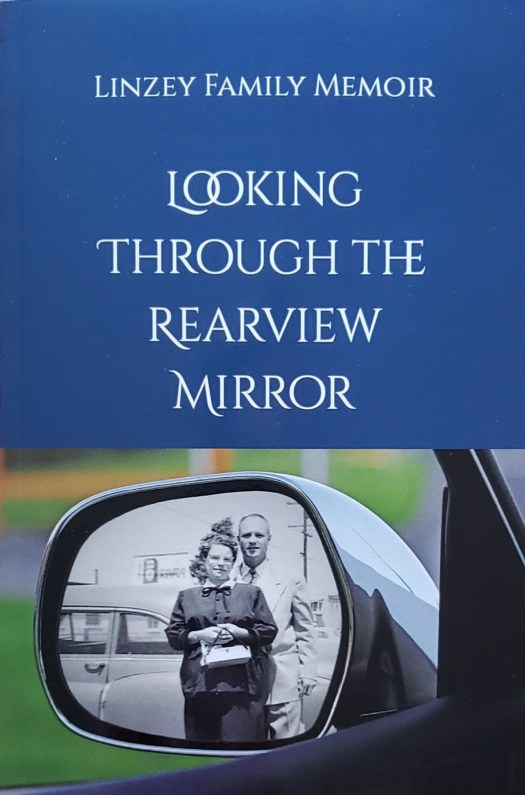
Looking Through the Rearview Mirror

I was flipping through the topic cards of a new trivia game when an idea splashed into my mind: what if my brothers and sisters and I were to use these as writing prompts for a family memoir? That could be a lot of fun and elicit some great memories. Our parents, a sister, and a brother had already passed away, and the remaining siblings lived in various places around the country. Maybe doing a project like this could bring a sense of togetherness and closeness. The concept was to send out one writing prompt per week via email, and then the siblings would write their memories and send them to me.

We started learning about one another and seeing each other in a whole new light, and the conversations that occurred every week became highly therapeutic for us. We accepted one another, and in the process, learned to love each other more deeply than any of us had ever experienced in our family.

Each week, we selected a new writing prompt. Everyone had a week to write up a memory or a personal experience that related in some way to the topic. And then we sent the stories to everyone. My original intent was not to share the stories with everyone until the end of the year. But the group decision to share with everyone right from the start is what made this endeavor the overwhelming success that it turned into. We bonded. We laughed. We cried. We identified with one another. We encouraged each other. We felt each other’s pain, sorrow, stress, and heartbreak. And we celebrated each other’s successes and victories. In essence, we created a safe environment and showed each other the beauty and wholeness of being vulnerable and trusting in an accepting relationship.

The results of this endeavor were fantastic. For the first time in our lives, we’re not divided into the upper half and the lower half. There’s no superiority or inferiority. We all have equal standing in this loving family. And it feels good. We created a priceless collection of family history that our grandkids and great grandkids might otherwise have never known. More importantly, we have grown and deepened as individuals and as a family.

Whether you are a family member, a distant relative, a neighbor, friend, or even a complete stranger, we invite you to join us on this journey as we share our lives with you. We hope you enjoy the stories. Welcome to the family.

The book may be purchased at https://paullinzey.com/books/

or from Amazon.

The Old Chevy

1When we drove up to the historic motel on Route 66, an old Chevy parked out front caught our eye. It had to be more than sixty-five years old, and though the paint was faded, worn-off, and rust-eaten the car still exuded a certain charm and beauty. A couple of the tires were flat and one window was permanently open. Yet, it had a stately dignity that spoke of a time when it ruled the road.

Once upon a time, this automobile was the lifeline for an entire family. Dad drove it to work; Mom took it shopping. Weekends were for family outings, and Sundays for going to Church. Each summer she took her family to a far-off destination, and special occasions saw her at family get-togethers. The kids learned to drive behind that huge steering wheel, and longed for the day they might get a car of their own: something new, shiny, and fast, with the latest technology.

But the old Chevy had long ago been discarded. Removed to the junkyard, where it sat for a decade: unwanted, untended, and ignored. Just taking up space.

Sometimes we look at people that way. We have no time for the elderly, no interest in what they have to offer or what they’ve accomplished. They had their day in the sun; now it’s our turn. We look at people of different ethnicities similarly. We too easily disregard their importance, their feelings, their dreams and ambitions, and what they can contribute to the community or the church. We treat children as though they were worth less than adults, and teens as if they should be banished to a remote island.

The Bible, on the other hand, tells us to honor people, value them, and care for them. To look for the beauty and the charm that are still there in every human being. Romans 12:10, for example, says to honor and give preference to one another.

James 1:27 reminds us that “pure and undefiled religion in the sight of our God and Father is this: to look after orphans and widows in their affliction.” In other words, we’re supposed to honor those in society who are helpless or in less fortunate circumstances.

The writer of Job adds to this discussion by recognizing the dignity of the common person and by identifying with the hireling and the slave. “Do not mortals have hard service on earth? Are not their days like those of hired laborers? Like a slave longing for the evening shadows, or a hired laborer waiting to be paid?”

In context, Job is saying there’s no difference between the rich and the poor, the master and the slave, when it comes to how hard life can be. We all want rest at the end of the day, we all want a better life for our family, we all have hopes and dreams, we all need love and friendship, and we all crave acceptance and respect.

The apostle Paul summarizes in Philippians chapter two, where he simply says we are to value others above ourselves.

The woman who owned the roadside hotel told us that a lot of her customers express an interest in old cars and the way life used to be on Route 66. So, she called a friend who had a junkyard, and asked if there was an old car she could buy. Her friend gave her the Chevy and brought it to her motel, where it has attracted attention and sparked conversation among people from all over the country and all around the world who see the car while driving by.

5

Who’s More Important?

Before getting married, it’s healthy and right to be loyal to one’s parents, siblings, and friends. But once you get married, the primary loyalty has to shift to the new spouse.

It’s not that you have to cut off relationship with your family and friends No, you still want them and need them in your life. But the spouse must become the new priority, and has to feel more important than the in-laws and others. To the extent you’re willing and able to let go of prior loyalties, you can form new ones. Likewise, to the extent that you can’t or won’t change priorities, your marriage will suffer.

While Genesis 2:24 states that it is the parents you must leave in order to form a new unity, there are others, as well. These might include a boyfriend, girlfriend, or a previous lover. In fact, there may be a number of people and situations included in what you let go of: friends, abuse, wealth, lifestyle, job, fame, high school sports, or any number of things in one’s past.

Your Past Can Ruin Today

One couple lost a son in a terrible accident. Unable to let go of that pain and loss, not knowing how to heal, and unwilling to forgive, the woman drove her husband to divorce. She allowed the past to ruin their marriage by allowing it to remain in the present. She kept the pain alive.

But it’s not just the negative that has to be left behind. Sometimes you have to let go of some positives: the good old days, a happy first marriage, that perfect job, a previous home and neighborhood, wealth or fame, or even a dream or ambition. An athlete whose playing days are over is often headed for emotional and relational disaster. A Soldier whose career comes to an end, sometimes can’t adjust to being a civilian and finding a new identity.

Someone who loses a leg or an arm in an accident at work might have a tough time accepting the new reality and letting go of the previous physical ability. Retirees sometimes struggle with letting go of their previous life, identity, and sense of importance. Empty-nesters also face a difficult struggle when the kids are gone. These transitions are tough.

Sue Augustine writes, “All of us can think of something we’d like to be set free from. For some, it’s hurtful memories, past regrets, or bitter resentment. For others it’s sorrowful remorse, frightful insecurities, or deep-rooted grudges. Imagine what it would be like to be free . . . . There is hope for you or someone you know who struggles with an imperfect or painful past.”

Her book When Your Past Is Hurting Your Present is arranged in three sections: Relinquish Your Past, Renew Your Present, and Rebuild Your Future. This is good guidance for couples who are still fighting or struggling with letting go of the past.

Bottom Line: make sure you live each day knowing that your spouse is the most important person in the world.

3

Heat, Danger, Dust, and Death

I knew from the start that I could be wounded or killed. It was a weird feeling, and I came to accept it. How or when, I had no idea. But every time there was another explosion, I wondered if this was the day.

My wife also knew I might not make it home alive. Or if I did return, I might be a broken man – crippled, blind, psychologically damaged, or all of the above. With that possibility in mind, she told me before I left home, “I don’t want to find out after you get back or after you’re dead that you were in danger. I want to know right away.”

Many of our military personnel won’t tell their spouse and family what they’re going through during war, thinking they’re protecting them. Plus, we’re limited in what we’re allowed to say or write to our families. But I have a hunch there are many, like my wife, who are better off knowing what’s going on, and who want to know.

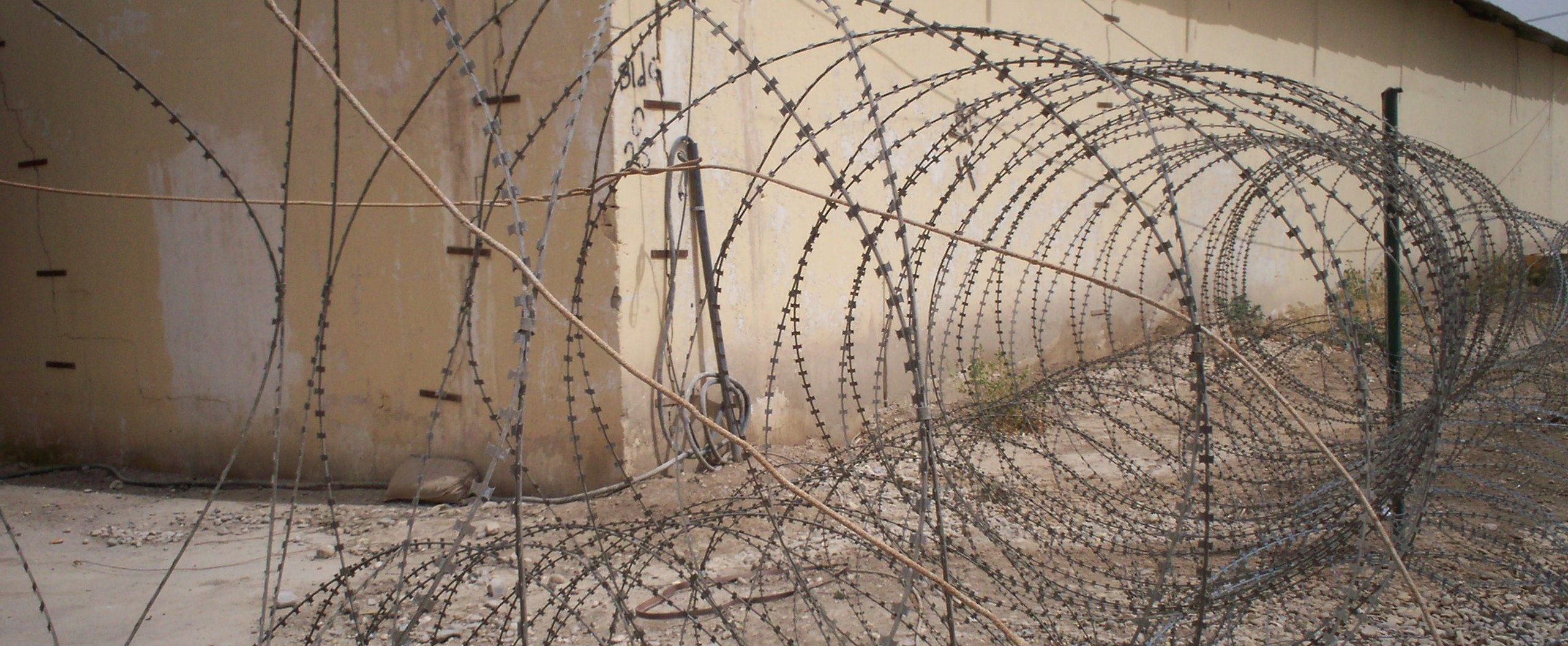
The first time I mentioned during a phone call some of the dangerous things that were happening, she said, “I already know. I saw it on TV and in the newspaper. They’re mentioning Diwaniyah and Camp Echo by name.” She scanned and sent me an LA Times article. I took it to our staff meeting the next morning, and discovered that many on our leadership team didn’t know what was going on outside the wire.

Heat, danger, dust, and death formed the context for the job I was sent to do. Operating from the philosophy that “ministry follows friendship,” I built relationships among the men and women at Camp Echo: military, civilian, American, and Coalition. This allowed me to be there when they were at their best and when they were at their worst, in their strongest moments and in their weakest.

In the heat of the battle and the heat of the desert, hours turn into days, which transition to nights, and add up to weeks and then months. The conditions wear you down, leaving an imprint on your mind and your soul: images that will be seen in dreams for months or years, sounds that reverberate long after you’re home, people you befriended and cared about and stared at death with, but will probably never hear from again. For many of us, it’s only memory now. But for others, the war continues . . . on the inside.

Picture 048 - Copy (2)