
John 3:16 has long been considered to be one of the most important statements in the Bible. Kids have been encouraged to memorize it in Sunday school. Preachers have expounded on it for centuries. Missionaries have gone to the far reaches of the planet to tell people about it. And football fans have created large signs to hold up for the cameras during televised games.
“God so loved the world,” it says. But who or what is it talking about?
“World” in this verse is the Greek word “cosmos” and in Classical Greek, it had to do with order, arrangement, or adornment. In the New Testament, it may be a reference to the universe or to our planet. A second possible meaning has to do with the corruption that we see in the world. And a third definition refers to the people who live on this planet. Human beings.
This is what the writer of the gospel had in mind when he wrote “God Loved the World.” Very clearly, he is saying God loves people. Not some people . . . all people. He doesn’t love some people more than others. He loves all people equally. There are other statements in the New Testament that quite explicitly tell us God doesn’t practice favoritism.
God loves everyone.
At the very end of the Gospel of Matthew, Jesus tells his disciples to take this message to all the nations. To all the “nations”? This is a different word, but the meaning has an interesting overlap with “world.” Nations in the Greek is the word “ethnos” and really means “people groups.” It’s where we get the words “ethnic” and “ethnicity.”
God loves people. Everyone. All people groups. No matter what language we speak. Regardless of the tone of our skin. No gender more than another. It doesn’t matter who our parents are or were or where we came from. God loves people.
What this means to me is that anyone who claims to be a follower of God should adopt his values because in a certain sense, we represent him to the world. And if we’re not in the habit of loving people, we’re not doing a very good job representing the God who is Love.
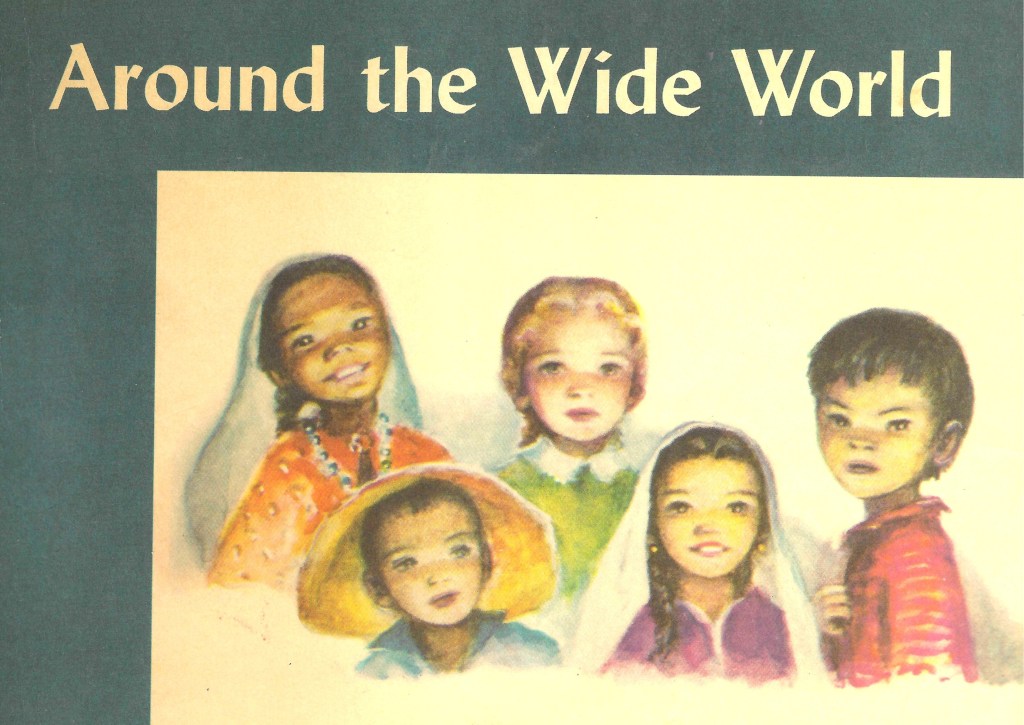
The picture below is the cover of a booklet my wife received when she was a young girl in Vallejo, California. She started attending Sunday School at a nearby Presbyterian church and was given this collection of stories from around the world. Published by the Westminster Press in 1956, and written by W. L. Jenkins.
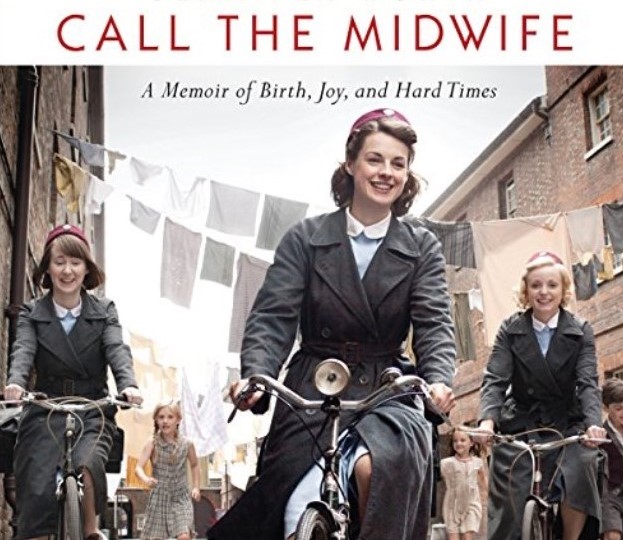 Last night, my wife and I watched another episode of the BBC television show, “Call the Midwife.” In this segment, the doctor had to be away from the office because of an emergency, and his wife, who functioned as the receptionist, was running the clinic. When the patients realized the doctor was gone, they refused to let her help them because they were totally unaware that she had worked as a nurse for ten years. In their eyes, she was “only a receptionist” and they bolted for the door until a doctor or nurse was there. The next morning, the “receptionist” was dressed in a nurse uniform, and when she opened the door to let the clients in, they saw her as a professional medical caregiver, and accepted her expertise. Even though she was the same person, respect came with the right uniform.
 When we drove up to the historic motel on Route 66, an old Chevy parked out front caught our eye. It had to be more than sixty-five years old, and though the paint was faded, worn-off, and rust-eaten the car still exuded a certain charm and beauty. A couple of the tires were flat and one window was permanently open. Yet, it had a stately dignity that spoke of a time when it ruled the road.

 Paul Linzey