Can Dreams Come True?

A question often asked by people around the world is whether dreams can come true. I think they can. Of course, it depends on what kind of dreams we’re talking about.

When I was a kid, I often dreamed about finding buried coins in the front yard. Lots of money, usually quarters and dimes. When I was eight or nine, this dream was so real that in the dream I took all the loot, wrapped it up, and hid it in my bottom dresser drawer so it would all be there when I woke up in the morning. I was so disappointed when I woke up the next day, ran over to my dresser, opened it, only to find that there was no money. I used to have that dream three or four times a year up until I was about thirty. Now it’s only once every other year or so. It never has come true.

Then there’s the dream where I’m in school or at church or some other public location, and all I have on is my underwear. Interestingly, in this dream, even though I am totally embarrassed, nobody else ever even seems to notice. Fortunately, this dream has never come true.

After returning from the war in Iraq, I frequently had dreams and nightmares for the next two years or so. Explosions, or gunfire, or dangerous situations. What a relief when those gradually faded away. It’s been several years now. The only two aspects of PTSD that still linger are the claustrophobia and eating in a hurry. I can’t seem to overcome those.

But there are some dreams that really do come true. Let me tell you about three of them.

Several years ago, my wife and I were invited to teach a three-week intensive class at the Hungarian Bible College in Budapest. We taught the class every morning, then in the evenings and weekends, would preach in churches in Budapest and nearby towns.

One day, our missionary hosts had to go up to Czechoslovakia (now Czech and Slovak) for meetings with their regional supervisor, and told us how to get from their home to the college. The trip would require a bus ride part of the way, then the subway, and then we had to walk the rest of the way. Of course, the trip would be reversed after the class in order to get back to their home.

Up to this point, we had resisted taking the subway because the missionaries had told us about an American pastor who got lost in the metro. He had missed the station where he was supposed to get off and rode the train all the way to the end. Seven hours later, he called to ask them to come and get him.

When we got to the subway, there was a huge, long escalator that took us way, way down. Longest escalator I have ever seen. When we finally reached bottom and turned right, I stopped.  This was really strange, because the scene in front of me was familiar.

“Linda, I’ve been here before.”

“What are you talking about? We’ve never been to Budapest.”

“I know that, but I’ve seen this before.” It was a really eerie feeling.

“How could you have seen this before?”

“I don’t know. But if this is what I’ve seen before, the subway cars will come from the right, and they’ll be blue.”

In about fifteen seconds, the train arrived . . . from the right . . . and it was blue. We go in, the doors close, and the freaky experience continues.

“When we get to the next stop, the doors on the left will open, and the walls will all be yellow.” Sure enough, that’s what happened.

Even Linda was weirded out by now. “What’s going on?”

“I don’t know! But at the next stop, the doors on the left will open and the walls will be orange. But when we get to where we need to get off, the doors on the right will open, and the walls will be blue.” It all unfolded exactly as I expected.

Then it dawned on me. Even though I had never been in a subway, a year-and-a-half before we came to Hungary I had a dream about being in this very subway, and the details in that dream were exactly the same as the reality we were now experiencing. That was a dream that came true.

Another dream I had as a kid was to be a Navy chaplain like my dad. But by the time I was ready to become a chaplain, the Lord redirected, I went into the Army instead, and had a wonderful career. Six years after retiring from the Army (which was thirty years after I became an Army chaplain) I was invited to serve as the Protestant pastor at the Naval Academy in Annapolis, Maryland, working with the chaplains. It was a one-year assignment, but a fantastic experience. I felt like I had come full-circle back to my dream of being a Navy chaplain.

One more dream worth mentioning here, was the dream of growing up, falling in love, and marrying the woman of my dreams. That’s another dream that came true. Life with Linda has been everything I had hoped for . . . and then some.

The Ukrainian Stranger

My first Sunday at the FOB in Iraq was Palm Sunday, one week before Easter 2007. Eight people showed up for church that morning: a civilian I called Pastor James, four American soldiers who had been meeting with him faithfully for the past year, my Chaplain Assistant, one new guy, and me. It was easy to see that the soldiers respected James. He had been there for them, and they loved him. My sermon was based on Mark chapter eleven, “Blessed is he who comes in the name of the Lord.” We finished worship having communion together, Pastor James and me side-by-side.

After I thanked everyone for coming and was about to dismiss the small group, a stranger in a Ukrainian army uniform walked into the chapel unannounced and proclaimed, “I have something to say.”

He had an excellent command of English vocabulary, but with a heavy accent. He was an attractive, friendly man, about 6′ 2″ with short hair, heavy eyebrows, and green eyes.

“I am not a Christian. Several months ago, I started having problems with my eyes. I went to the doctors here in our medical clinic. They told me I had an incurable eye condition. They brought in a specialist who confirmed the diagnosis. He said there was nothing they could do for me. No treatment. No medicine. No surgery. He said my eyes would gradually get worse until I was totally blind. Last Sunday I came here and asked the men if they would pray for me.” He pointed to James and said, “That man put his hands on my head and prayed. These other guys put their hands on me and prayed too.”

“The next day, last Monday, I could see better, so I went back to the clinic. The doctors did the same tests all over again. This time, they said I don’t have that disease. I have been back to the clinic to see the doctors almost every day this week. Your God healed me. I am not going to lose my eyes. I am so happy. How can I become a Christian?”

You could hear the sounds of surprise and amazement from the small congregation, especially from Pastor James and the men who had prayed with him the previous Sunday. In simple terms, I explained who Jesus was and what it meant to receive him as Lord and Savior.

I wasn’t a part of the miracle of healing that he experienced the previous week. Pastor James and the others had prayed for him. But on my first Sunday at Camp Echo, I had the privilege of praying with this man, a captain in the Ukrainian army, as he asked Jesus to come into his heart. The feeling among our little group was incredible.

The Ukrainian brother came alive. Every time I saw him, whether walking down the street, sitting in the DFAC, or attending a staff meeting, he hugged me, told me how thankful he was that Jesus healed him and saved him. And then he’d say, “We have to tell people about Jesus. They have to know him.”

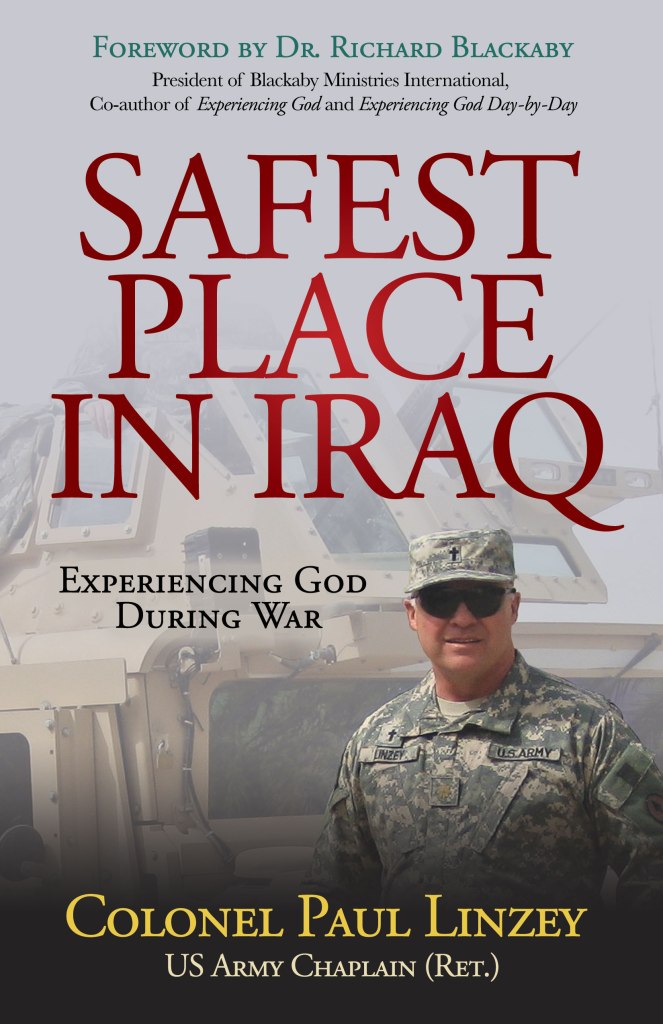
The rest of the story may be read in the book Safest Place in Iraq. You may click the Books tab above or order it through any bookstore.

Invisible Forces, Hidden Issues

Rain and snow fall on the Little Belt Mountains in the Lewis and Clark National Forest, ninety miles east of Helena, sixty miles south of Great Falls. Streams and creeks flow past the towns of Neihart and Monarch, past Camp Rotary and the Logging Creek Campground, on their way to the Missouri River. But most of the water seeps deep into the soil, draining into the water table known as the Madison Aquifer, where it becomes invisible.

The Madison is a huge reservoir of fresh water, lying underneath five U.S. states and three Canadian provinces. This hidden water is moving. It’s flowing. It’s active. It provides water for thousands of wells, springs, and streams, and becomes the sustainer of life for countless people, animals, plants, and trees. Ponderosa Pine and Douglas Fir dominate the hillsides, providing shelter for black bear, elk, and white-tailed deer.

The aquifer’s underground consists of layered limestone, which allows some of the water to trickle through until it finds its way to Giant Springs, outside the city of Great Falls. Once the water gets there, hydraulic pressure forces it out at a rate of more than 150 million gallons per day. Some studies indicate that it takes 26 years for the water to travel the 60 miles from the mountains to Giant Springs. Other data suggest that it might be closer to a 50-year journey before it emerges and forms the Roe River.

However, some of the water is trapped in the underground, where it remains far longer than two-and-a-half decades. Scientists have determined that some of the water has been in the underground for two or three thousand years . . . maybe longer. Instead of flowing out, it stays in the aquifer century after century, millennium after millennium.

The water that travels from the mountains and bursts forth at Giant Springs has a year-round, constant temperature of 54 degrees Fahrenheit. This might seem cold to people in warmer regions of the world, but considering the harsh, bitter conditions of a Montana winter, 54 degrees is quite warm. When outside temperatures get down to 50, 60, and 70 below zero, the water from the springs is more than 100 degrees warmer than the air temperature. On the other hand, during the summer months, when the outside temperature reaches to more than 100 degrees Fahrenheit, the cool waters from the springs are rather refreshing.

Most of the water stays underground and doesn’t make the journey to Giant Springs. Instead, it combines with streams from the Black Hills, the Big Horn Mountains, and the wider drainage area. Eventually, most of it surfaces in Canada. But some of the water never escapes. It’s still trapped, still hidden, still invisible.

This underground water system is an allegory about what happens in peoples lives. There’s a lot going on inside of us, perhaps a whole lot more than most of us are willing to admit to ourselves or allow others to know about. Because of past, painful experiences, we force our thoughts and emotions underground, and they become an internal, invisible force. It may be hidden, but it’s moving. It’s active. In fact, sometimes what’s going on inside takes on a life of its own, until one day, it gushes out in destructive words or actions, and everybody says things like, “Wow. I never saw that coming.” Others are trapped in pain, decade after decade, while life, happiness, and opportunities pass them by. Either by choice or by circumstance, their issues never surface and are never resolved.

The Holy Spirit is ready to help with this inner world of invisible forces and hidden issues. He wants to liberate you. You don’t have to remain trapped, hidden, or invisible any longer. Its time for a new beginning.

Unity in Marriage

IN 2019 I wrote a book on marriage called WisdomBuilt Biblical Principles of Marriage. The book presents twelve principles that when lived day by day can revolutionize any relationship.

A few months after the book came out, I was interviewed by Chris Johnson at Charisma Magazine HQ in Lake Mary, FL. If you’d like to hear the podcast of the conversation, click on Charisma Podcast. Then if you want to get the book, click on the picture of the book above. You are welcome to contact me through the Contact page.

80th Anniversary of Pearl Harbor

December 7, 2021 is the 80th anniversary of the attack on Pearl Harbor, which launched the United States into World War II. The Battle of Midway was the greatest naval battle ever fought. Three enemy aircraft carriers were bombed into blazing infernos in six minutes, burning and drowning 1,800 seamen. A fourth carrier sank with a loss of 700 men.

USS Yorktown, with a ship’s crew of just over 2,200 sailors and about 300 aviators, received three bomb hits and two torpedoes when Captain Elliott Buckmaster ordered, “Abandon ship.” 400 men were dead. 2,000 sailors went down the lines into the murky, oily waters of the Pacific.

This book tells the story in light of faith, prayer, and the God who was personally involved in the men’s lives. The author conducted Bible studies in the ship. In answer to the prayers of those men and their loved ones, many of the sailors accepted Christ as Lord and Savior. There were miraculous rescues from bomb bursts and fragmented steel, as Navy destroyers pulled blue jackets from the sea. Barefoot men clad only in their underwear knelt on the deck of a destroyer and offered thanks to Almighty God for his mercy and salvation. A true life story of God’s presence in a battle at sea.

Dead in the Water is the story about a man who was faithful to God during the toughest days of his life, and the God who was faithful to that man. It provides a glimpse of divine intervention in the lives of men who were far from home, providing hope and comfort in an otherwise bleak situation. At the same time, it tells of some fantastic answers to prayer, as well as some devastating tragedy.

Stan “Deacon” Linzey was a ship’s telephone operator aboard the USS Yorktown when it engaged in the battles of Coral Sea and Midway. He was also a clarinetist in the Navy Band. When the order came to abandon ship, he scooted to the edge of the deck, lowered himself into the ocean hoping there were no sharks nearby, and treaded water until a U.S. ship came to the rescue.

After the war, Linzey went to college and seminary, and then returned to the Navy as a chaplain, serving another twenty years. He wrote this book, and several others, after retiring from the Navy in 1974.

Linzey’s first son, Stanford Eugene Linzey III, goes by the name of Eugene, and is an award-winning journalist and an author of several books. After his father died, Eugene became the chaplain of the Yorktown Reunion Club, a role Stan had filled until his death at age eighty-nine.

Paul Linzey is the third son. He is a retired Army chaplain, and at the time of this writing, is serving as the Protestant pastor at the United States Naval Academy. He is an award-winning author of several books, and is a regular contributor of devotional articles for CBN.org.

One of the reviews:

“USS Yorktown at Midway is a remarkably intriguing and compelling account of the Battles of the Coral Sea and Midway as seen through the Christian eyes of the Lord’s servant, Captain Stanford E. Linzey, CHC, USN (Ret.). Dr. Linzey allows the reader to easily understand and visualize not only the tragedies of combat, but also the human and spiritual elements of surviving the harrowing and horrifying disasters of naval warfare.”

This is a reprint of a book originally published with the title, “God Was at Midway.” It has a new introduction by S. Eugene Linzey III and a new afterword by Paul E. Linzey. The book can be purchased on Amazon by clicking here.

Snatched by Goodness

On October 31, I preached in the Naval Academy chapel. The scripture of the day was Hebrews 9:11-14, where Jesus is introduced as “High Priest of the Good Things.” The sermon title was “Snatched by Goodness,” and I told a couple of stories of my life being spared by someone who literally snatched me by the collar. Then I asked one of the men of the chapel to tell of a personal experience he had as a Naval Aviator. Ed Grunwald’s story is a powerful testimony of the goodness of God in answer to prayer in a desperate situation.

Ed called me yesterday to tell me another story. He graduated from the Naval Academy with the class of 1950, and has been a member of the USNA protestant congregation since retiring from the Navy. For the past twenty-five years, he has been praying for an opportunity to tell his story to the congregation.

I had no idea all that was going on when I felt the leading of the Lord to have him share his story. I had met him when I visited him in his home a few weeks earlier, and as I was preparing the sermon, I just had an inclination to ask him.

God is good. Jesus is the “High Priest of the Good Things.” And it’s wonderful to hear about how people’s lives have been touched by goodness.

If you click on the YouTube link, you can view and listen to the whole service. My message begins at 29:45. Ed’s story starts at 35:15 and runs about eleven minutes.

Looking Through the Rearview Mirror

I was flipping through the topic cards of a new trivia game when an idea splashed into my mind: what if my brothers and sisters and I were to use these as writing prompts for a family memoir? That could be a lot of fun and elicit some great memories. Our parents, a sister, and a brother had already passed away, and the remaining siblings lived in various places around the country. Maybe doing a project like this could bring a sense of togetherness and closeness. The concept was to send out one writing prompt per week via email, and then the siblings would write their memories and send them to me.

We started learning about one another and seeing each other in a whole new light, and the conversations that occurred every week became highly therapeutic for us. We accepted one another, and in the process, learned to love each other more deeply than any of us had ever experienced in our family.

Each week, we selected a new writing prompt. Everyone had a week to write up a memory or a personal experience that related in some way to the topic. And then we sent the stories to everyone. My original intent was not to share the stories with everyone until the end of the year. But the group decision to share with everyone right from the start is what made this endeavor the overwhelming success that it turned into. We bonded. We laughed. We cried. We identified with one another. We encouraged each other. We felt each other’s pain, sorrow, stress, and heartbreak. And we celebrated each other’s successes and victories. In essence, we created a safe environment and showed each other the beauty and wholeness of being vulnerable and trusting in an accepting relationship.

The results of this endeavor were fantastic. For the first time in our lives, we’re not divided into the upper half and the lower half. There’s no superiority or inferiority. We all have equal standing in this loving family. And it feels good. We created a priceless collection of family history that our grandkids and great grandkids might otherwise have never known. More importantly, we have grown and deepened as individuals and as a family.

Whether you are a family member, a distant relative, a neighbor, friend, or even a complete stranger, we invite you to join us on this journey as we share our lives with you. We hope you enjoy the stories. Welcome to the family.

The book may be purchased at https://paullinzey.com/books/

or from Amazon.

The Risk of Faith

Daniel was thrown into a lion’s den because he prayed three times a day to his God. But the Lord protected him, and the ferocious beasts lay down and purred.

Not far from there, Shadrach, Meshach, and Abed-Nego were thrown into a blazing fire because they refused to bow down and worship a golden statue. Instead, they declared,

“Our God whom we serve is able to deliver us from the fiery furnace, and He will deliver us from your hand, O king. But if not, let it be known to you, O king, that we do not serve your gods, nor will we worship the gold image which you have set up.” (Daniel 3:17-18 NKJV)

Their faith didn’t depend on whether they escaped. They were fully prepared to risk everything, which meant they didn’t serve the Lord only during the good times. They didn’t trust God only to get their way. There was nothing selfish about their prayer, their life, or their religion. Their faith in God was genuine, even when it resulted in persecution. Even when it meant risking their lives. Death was certain, and they knew it—unless God did a miracle. Either way, they were determined to be faithful.

The fire was so hot that the soldiers escorting them to the flames died on the spot. But for Shadrach, Meshach, and Abed-Nego, not a hair on their head or their arms was singed, and not a thread of their clothing burned. They never even felt the heat. It was like they were taking a walk in the park on a cool, breezy day.

When the smoke cleared, King Nebuchadnezzar looked into the furnace, and to his amazement, there was a fourth man in the flames with them. The king couldn’t believe his eyes. Daniel 3:25 reports Nebuchadnezzar’s amazement.

“Look! I see four men walking around in the fire, unbound and unharmed, and the fourth looks like a son of the gods.” (Daniel 3:25 NIV)

Daniel understood the dangers of breaking the law and praying to his God. Hungry lions can easily tear a man apart. Shadrach, Meshach, and Abed-Nego knew the risks when they decided not to bow to the king’s statue.

However, God intervened, and Daniel survived to tell the King once more about the goodness and reality of the true God. Shadrach, Meshach, and Abed-Nego, encountered the Lord right there in the middle of the blazing heat.

The eleventh chapter of Hebrews makes it clear that not everyone who takes the risk of faith will escape pain or death. I would encourage you to read the entire chapter, but verses 32–38 show how the situations turned out for some of God’s people. And verse 39 adds,

“These were all commended for their faith.” (Hebrews 11:39 NIV)

Being a disciple of Jesus Christ always involves risk. Some will face ridicule. Others might lose their jobs. Some are abandoned by their family. Others experience physical torture. Some will survive. Others may die. What is God asking you to risk?

The bottom line is that your faith will cost you something. God is calling you to accept the challenge, count the cost, and take the risk.

Christians in many places around the world are experiencing persecution at this moment. In the same way, it might cost you something to follow Jesus. But like those men in the book of Daniel, you can be faithful regardless of the outcome, because the fourth man in the fire is going to be there with you.

This article was featured on CBN.org as the daily devotional reading on October 13, 2021. The link to the article is https://www1.cbn.com/devotions/the-risk-of-faith.

Museum of the Bible

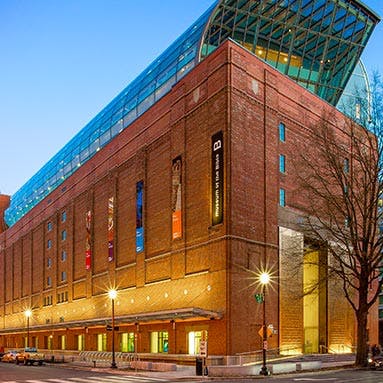
We had heard about the Museum of the Bible, and definitely wanted to experience it. The first section we visited was bout the Bible’s impact on America’s early history, culture, and development as a nation. Oh my goodness! The information was well researched, fascinating, and powerful.

Did you know that the first Bible published in North America was printed in 1663 at Harvard College in Cambridge, Massachusetts. But it wasn’t in English because the British had a law that any book in English had to be printed in England. The first Bible was written in the Algonquin language. Many of the founding fathers had Bibles and often quoted from them. In fact, the Bible helped shape our laws, policies, values, and culture.

The next section focused on the impact of the Bible throughout the world. There was an extensive display that demonstrated the influence of the Bible in just about every sphere of life: science, education, medicine, prison, politics, humanitarianism, the arts, civil rights, and more.

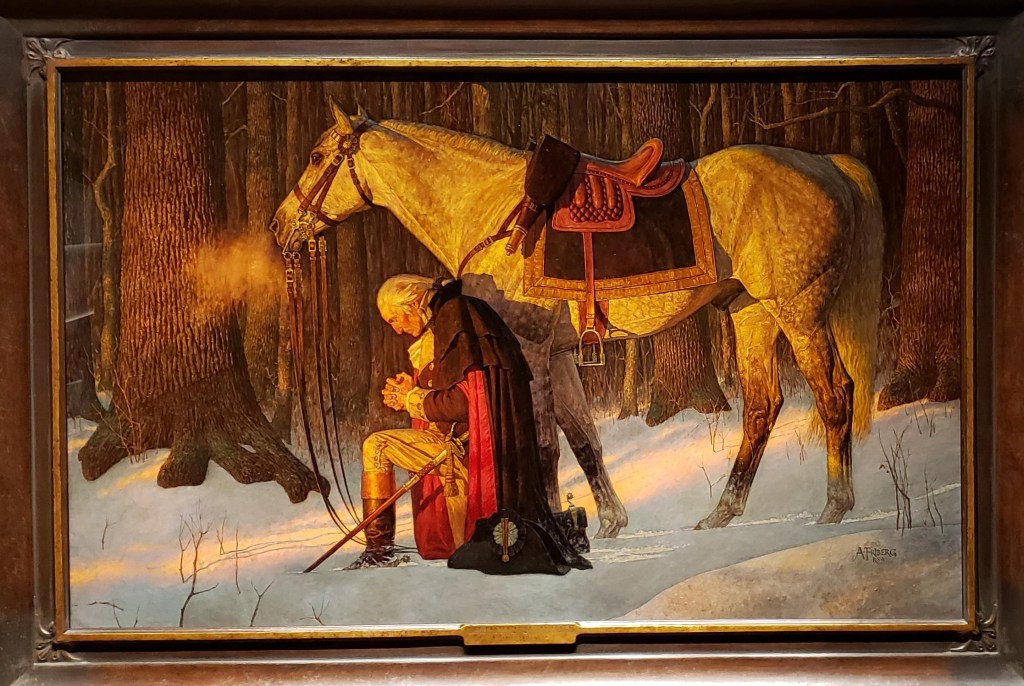
On one of the levels, we discovered several Tiffany stained glass windows: beautiful works of art that portrayed religious scenes or people of the New Testament. There was also the famous painting of George Washington, kneeling in the snow next to his horse, eyes closed, hands folded, and praying.

Moving to one of the higher floors, we enjoyed the Old Testament immersive experience with displays and films showing key moments and experiences of the people of God. Then we got to walk through the village of Nazareth, built to demonstrate what life was like in the first century.

The top deck provides a view of several prominent buildings in Washington DC, especially the Capitol Building, the Washington Monument, The National Cathedral, The Supreme Court, and the Library of Congress.

The restaurant on the 6th floor wasn’t open yet, but the cafe on the 2nd floor was really good. There were several exhibits and movies we didn’t see during our first visit, so we plan to return a few more times so we can take it all in.

Should I Give This to a Friend?

I got this email through my website yesterday:

Hi,  Paul. A friend loaned me a copy of your book and I read it. I enjoyed it, so I bought a couple of copies. My pastors wants to read it. Here’s my question: I have a friend who served in Iraq some time ago, maybe 15 years ago or more. He did lose some friends and saw action that had casualties. Do you think this book would be appropriate to offer for him to read? Would it bring some perspective or healing? Or take him back to relive the horrors of war? I would appreciate your input.

And here’s what I wrote back to him:

Hello, friend. Great to get your email. Thank you. I think the book would be a good thing for your friend to read. While it mentions some of the painful stuff and the danger, it also shows how some of us processed the PTSD and got better. The Lord is a huge part of that, and I think it could be helpful for your friend. I’ve had a chance to talk with other veterans who went through some pretty horrible experiences, and they told me it was helpful. So go ahead and share it with him, and tell him he’s welcome to give me a call or an email if he wants to talk about his experiences over there.

The man’s pastor wants to read the book, which leads me to say this: Anyone looking for a book to use for a book group, a Bible study, or a home group discussion might consider using Safest Place in Iraq. There are discussion questions in the back. Plus, there’s a separate study guide. Consider using it in your group or at your church.