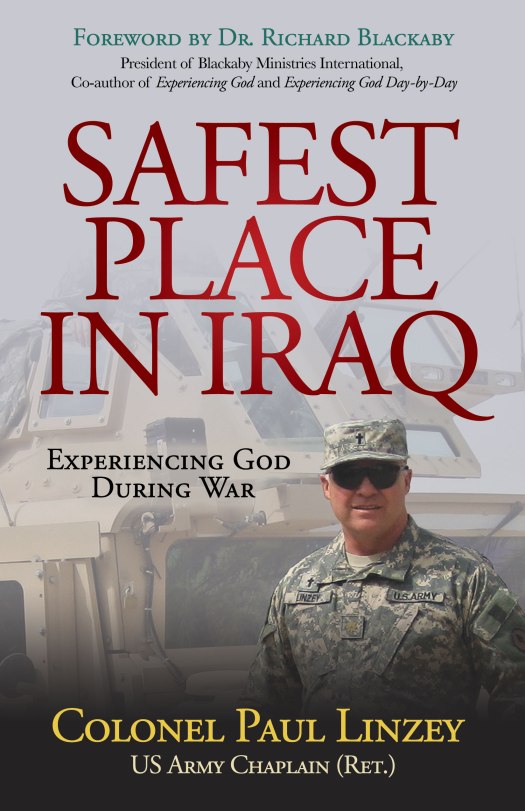
Chapter One Excerpt: Safest Place in Iraq

Heat, danger, dust, and death formed the context for the job I was sent to do. Operating from the philosophy that “ministry follows friendship,” I built relationships among the men and women at Camp Echo: military, civilian, American, and Coalition. This allowed me to be there when they were at their best and when they were at their worst, in their strongest moments and in their weakest.

In the heat of the battle and the heat of the desert, hours turn into days, which transition to nights, and add up to weeks and then months. The conditions wear you down, leaving an imprint on your mind and your soul: images that will be seen in dreams for months or years, sounds that reverberate long after you’re home, people you befriended and cared about and stared at death with, but will probably never hear from again. For many of us, it’s only memory now. But for others, the war continues … on the inside. (From chapter one of the new book, Safest Place in Iraq).

Great Book for Small Group Discussion

Even on good days, living for Christ is a challenging, risk-laden endeavor. One way to make the task a bit easier is to see how other Christians have successfully navigated their temptations and struggles.

Safest Place in Iraq aims to do just that, by peering behind the curtain and showing how one military chaplain handled the various dangers, people, and circumstances he encountered during his war-time deployment in South Central Iraq. The result is a story that ranges from death and destruction to friendship and faith, and from temptation and torment to redemption and revival. Colonel Paul Linzey identifies the broad themes that everyone—both Christian and non-Christian—has to deal with when the going gets tough. He also shows by example what it takes to overcome life’s obstacles, whether dodging mortars in the desert, or fighting fear, loneliness, and temptation at home or at work. And in the process, Safest Place in Iraq shows that it is possible to remain true to one’s values and calling as a person of faith in a hostile world.

Safest Place in Iraq would be perfect for individual reading, but it’s also ideally suited for a small group discussion such as a home group, bible study, a men’s group.

In addition to telling the stories of answered prayer, divine intervention, and people coming to faith in Christ, it answers questions that people are asking about Christians in the military, overcoming temptation, and other issues.

Sex and Sensuality

God created humans to enjoy sex and sensuality immensely and intensely. Yet, these are to be experienced within marriage. When practiced in this context, it’s designed to be a mutually awe-inspiring, powerful experience that carries the full blessing of God.

The goal of sex is usually intercourse, but the goal of sensuality may be to express attraction, show that you care, or make your partner feel loved. Sex and sensuality both help couples bond together and feel close.

In essence, sex is about intercourse, while sensuality is about bringing pleasure to each other. Sometimes this includes sex, but many times does not. Sex is making sure you get what you want and need. Sensuality is giving, serving, and pleasing your partner. When combined, sex and sensuality provide an opportunity to experience the whole range of sensual pleasure, demonstrate faithfulness, and practice self-control.

One way of approaching sex and sensuality is to consider each one as a gift. We like a gift for a variety of reasons. We like the way it makes us feel. Or, it meets a need. Perhaps we enjoy the experience it brings. The same is true for why God gave us the gift of physical intimacy. It feels good, it meets a need, and we enjoy the experience. Let’s face it: it’s fun & exciting.

If someone doesn’t like sex or sensuality, it’s usually because there’s been some pain in the experience of it. Somewhere along the way the person might have been abused, mistreated, taken advantage of, ridiculed, betrayed, or abandoned. Or it hurts physically.

If this is the case in your marriage, it might be helpful to talk about it together and to seek professional help, because in a normal, healthy marriage the gift of intimacy is a wonderful part of the relationship, and giving yourself to your partner intimately is one of the most valuable gifts you can give.

If you and your partner will honor your marriage and maintain sexual and sensual purity, you will meet each other’s needs and capture each other’s imagination. The gift you give each other will be beyond comparison. Choosing to honor your mate and your marriage will always have great results.

You can read more about building a great marriage by clicking WisdomBuilt Biblical Principles of Marriage, then scroll down.

Only a Receptionist

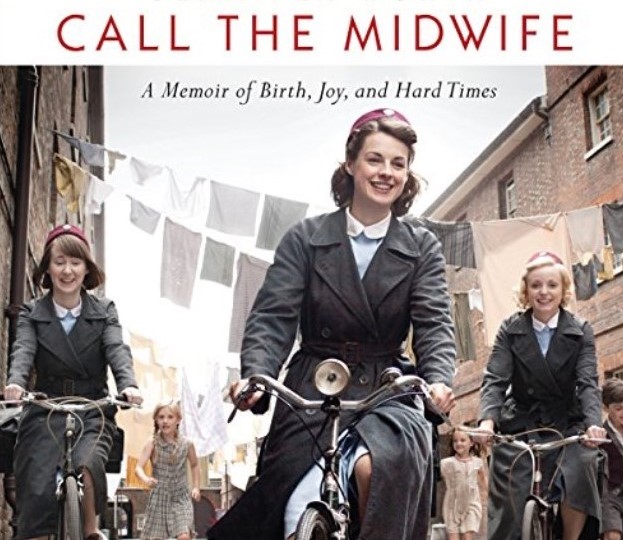
Call the Midwife Jenny (3)Last night, my wife and I watched another episode of the BBC television show, “Call the Midwife.” In this segment, the doctor had to be away from the office because of an emergency, and his wife, who functioned as the receptionist, was running the clinic. When the patients realized the doctor was gone, they refused to let her help them because they were totally unaware that she had worked as a nurse for ten years. In their eyes, she was “only a receptionist” and they bolted for the door until a doctor or nurse was there. The next morning, the “receptionist” was dressed in a nurse uniform, and when she opened the door to let the clients in, they saw her as a professional medical caregiver, and accepted her expertise. Even though she was the same person, respect came with the right uniform.

This concept was the basis of John Molloy’s 1975 book titled Dress for Success, and the sequel two years later, The Woman’s Dress for Success. The average person is highly influenced by other people’s outward appearance, and most of us aren’t able to see beyond the surface. If people look good on the outside, we think more highly of them. But if their appearance isn’t impressive, we think less about them and, too often, we treat them worse.

This interpersonal dynamic can be seen in the Bible, too. In 1st Samuel chapter 16, the Lord told Samuel to go to Bethlehem to anoint one of Jesse’s sons to be the new king. When Samuel saw Eliab, he was impressed, and thought this must be the young man who would be king. But the Lord said to Samuel in a now-famous verse, “People look at the outward appearance, but the Lord looks at the heart.”

It seems people of every generation have to re-learn this lesson. It took a vision from the Lord to bring Peter to the point of admitting that “God shows no partiality.” James had to remind the church not to treat wealthy people better than the poor when he wrote, “My brothers and sisters, believers in Jesus Christ must not show favoritism.”

It’s important for us to dress appropriately for work and business appointments. It does make a difference how people see us and think about us. But Christians are called to be different. We can grow in our relationship with Christ and ask the Holy Spirit to help us see people through His eyes, to see beyond the outward appearance and see the heart, the real person. We are called to treat all people with dignity and respect, no matter who they are or what they look like.

The apostle Paul tells Timothy not to let anyone look down on him because he is young. I think it would be fair to replace “young” with a number of other possible factors. Don’t let anyone look down on you because you are poor, darker skinned, an immigrant, a woman, a senior citizen, or unemployed. The apostle continues, “Instead, set an example by the way you live and the way you conduct yourself.”

Only a receptionist? Only a teen? Only a woman? Only an immigrant? Only a farmer? When I mentor people, I remind them never to use the word “only” when talking about themselves or others. As Christians and as human beings, we have an opportunity to get beyond superficial appearances and circumstances when it comes to how we treat people and how we value them.


business-3560932_1920

Building Your Home

The principles in WisdomBuilt show you how to build your house in such a way that you discover the beauty, the grandeur, and the immeasurable treasures God has for you. In the same way every home is decorated differently, no two marriages will look and feel the same. Your relationship will be unique because you are one-of-a-kind, but the wisdom offered here will show you how to bring out the best in yourself, your partner, and your coupleness.

The longer I’m married, the more I study the Bible, and the further I read the research of counselors and psychologists, the deeper I realize there is a remarkable amount of wisdom to be gained from each source. What’s even more amazing is the extent to which they agree with each other.

architecture-1836070_1920

Freedom: An Aspect of Love

In Ephesians 5:21-25, marriage is said to be like our relationship with Christ. Since that is the case, we need to understand the impact Jesus has on us when he comes into our lives. A quick glance at Galatians 5:1 shows what the Lord is up to in our lives: Christ has liberated us to be free.

Since husband and wife are called to represent the Lord to one another, the impact you have in each other’s lives should be the same as what the Lord is doing. In other words, you are called to set each other free. Your love for each other and the way you treat each other should liberate each other, and remove constraints, yokes, or bondage. Love allows and empowers you to pursue life, to fulfill dreams and aspirations, to live life to the fullest.

Jesus said, I have come so that they may have life and have it in abundance. Everyone who is married should be able to say this to his or her mate.

Does the way you and your spouse treat each other set you free? Free from fear or abuse? Free from a power struggle? Free from worry and stress? Free from debt? Free to relax and be yourself? Free to love and trust? Free to enjoy life and follow your dreams?

Freedom should decorate every room in your home, and establish the mood in every part of your life. When this happens, you begin to realize that freedom really is an aspect of love.

This thought is expressed more fully in my book, WisdomBuilt Principles of Marriage.

books-3669911_1920

Miracle of Forgiveness

It is crucial that we understand the power of forgiveness. When we forgive, we release ourselves from the pain and injustice in our past. But forgiveness does not happen quickly. It cannot happen quickly. It happens slowly, with a little understanding, and with some confusion. It has to sort out the anger, the pain, and the injustice. When forgiveness has finished its work, however, both the forgiver and the offender have been renewed, transformed, and set free from the pain of the past.

Lewis Smedes was an ethicist who wrote about the miracle of forgiveness. “When you forgive the person who hurt you deeply and unfairly, you perform a miracle that has no equal.” He goes on the say that forgiveness is not for the weak. It isn’t for the trivial offenses. It is reserved for the deep wrongs that cannot be forgotten, ignored, or tolerated.

Forgiveness doesn’t mean there will be no scars. We often carry the consequences of pain long after the hurting stops and the forgiveness is complete. The Christian singing group called Point of Grace sings a song called “Heal the Wound.” The words of the chorus deal with the theme of forgiveness and healing, which are often followed by scars that remain for a lifetime.

Heal the wound but leave the scar

A reminder of how merciful You are

I am broken, torn apart

Take the pieces of this heart

And heal the wound but leave the scar

One middle-aged couple recognized that they still carried some of the baggage from their past, so they decided to do something about it. They had both been in a previous marriage, and still felt some attachment and affection for their exes. In addition, they felt guilt and pain because of some of the decisions they had made early in life. They called their pastor and met with him, asking for his guidance. He suggested that they create a private ritual, during which they would identify the aspects of their past that they wanted to be free from. He also talked about how to forgive each other, and how to receive God’s forgiveness.

They took a month to plan, and then went camping. The second day, they took a hike along the river, until they came to a suitable spot. They both wrote down the specifics of what they wanted to let go of. Then they read them to each other. They prayed and asked God to wash them, forgive them, and help them to let go of the past. They asked each other for forgiveness, too. Then they threw their lists into the river. Watching them float downstream was therapeutic. The river represented a washing or cleansing, and they were able to start fresh, committed to each other, committed to living in the present.

I am not saying this is the right thing to do. I do not endorse littering or polluting the environment, but am merely reporting what this particular couple did. You might need to be creative and come up with an action plan that’ll work for you.

To the degree that a couple is willing and able to leave the past, they have an opportunity to create a new unity as a couple. The opposite is also true. To the degree that they cannot or will not let go of the past, they will be unable to create the unity essential to growing a healthy, happy marriage.

people-2603521_1920

Reflections: An Anthology of Memoir and Short Story

Cover on EbookEvery life is a series of stories, and each person an endless repository of action, emotion, and relationship. One of the goals of literature is to capture that collection of raw material, and frame the narrative in such a way that those who read the finished product are invited to participate in a vicarious experience. If the stories are told well, readers can feel pain, joy, love, fear, or wonder. They are able to cry when a lover is betrayed, cringe when the hero of the story is under attack, or crawl under a blanket and hide to escape being discovered by the intruder.

I remember coming home from work one day and discovering my wife and children watching a scary movie on TV. All three of my kids were on the same sofa, huddling together under a blanket as the terrifying story unfolded before their eyes. The fear was real. They were experiencing the lives of the people on the screen.

That’s what happens when a good book is placed in front of your eyes, too. The reader can learn, grow, increase in wisdom, or even become a better friend or lover as a result. Sometimes, reading a selection can lead to anger, motivate to action, or inspire a deeper faith. Other times, you come away so afraid you want to lock the doors and shut out the world.

This anthology represents the collective creativity of seven people who met in a creative writing class in Lakeland, Florida. Some of the stories are nonfiction, meaning the experiences described actually happened. Other selections are fiction, short stories that might sound as if they’re true to life, but didn’t really happen. Good fiction usually does ring true, and good nonfiction should read like a quality short story or novel.

Each writer obviously has a unique personality and writing style, and every story has a different theme and mood. Taken together, this anthology should warm your heart, provoke you to action, inspire you to travel to a place you’ve never been before, and entice you to want to read more. Some of the stories will cause you to question what you believe, and others will affirm what you already consider to be true. Perhaps you’ll find yourself sitting in your chair with a smile breaking across your face, or see yourself in one of the scenes.

Several of the stories in this collection deal with sensitive issues like racism, gender equality, elitism, religion, or national origin. One anecdote, written by a person of color, refers to an inappropriate term for African Americans. The author of the story is talking about society’s values, which carry over to a form of institutionalized or enculturated racism. The contributors to this anthology, the editor, and the Rath Connextions and Education Center are not promoting the use of the term, nor are we condoning racism or the demeaning of any person or people group. We desire to honor and respect the experiences of all our contributors and readers.

We offer this anthology in the hope that you are entertained, enlightened, informed, or inspired. And just maybe, all of the above.

The book is available on Amazon.com.


Safest Place in Iraq

Linzey-cover-v4 PreliminaryI am thrilled to announce that the book is finally ready to order. In fact, if you buy it before April 15, I will lower the price, autograph it, cover the shipping expense, and pay the sales tax for you. Plus, if you order two or more, I’ll send you the Study Guide free.

The normal list price is $16.99 at Barnes & Noble, Books-A-Million, Amazon, and most other outlets. But if you buy it from me before April 15, you can get it for only $15.00 with no sales tax and no shipping.

There are two ways to do this. First, you may click on https://paullinzey.com/books and order it on my website using PayPal. That should automatically give me your name and mailing address. The other way is to send me a check. The mailing address is:

Paul Linzey

2161 East CR-540A, #120

Lakeland, FL 33813

The book is perfect for class room, small group discussion, or individual use. Some pastors and Bible study leaders have used it for sermon illustrations. Feel free use the Connect page to ask questions or request additional information. Or you may contact me on Facebook.

Safest Place in Iraq is already available as an e-book at several booksellers. The typical cost for the e-book is $9.99, although I saw one online bookstore offer it for $8.99. The general release of the book takes place in September. Until then, you can get the print version only from me.

Linzey-cover-v4 Preliminary

You Don’t Understand Me

You Just Don't UnderstandWhen I came across Deborah Tannen’s book, You Just Don’t Understand, it looked good, so I bought it, took it home, and placed it on my nightstand. That night I picked it up and started reading, and reading, and reading. The more I read, the more I laughed out loud. The subtitle—what it’s really all about . . .

is Women and Men in Conversation.

“What are you laughing about?” my wife wondered.

“I’m laughing cause she’s talking about you and me.”

“What?”

Every night I read a few more pages, still laughing. I’m sure Dr. Tannen didn’t mean for her book to be taken as a comedy. She wrote it as a straight-forward description of the way men and women communicate, based on the way they think and their goals and purposes in the relationship. But when you see yourself and your spouse on every page, it makes you wonder, How did she know that’s what we do?

I think I learned more about communication with my wife from Tannen’s writing than from any other source. It was easy to see my wife’s foibles and laugh about them. Aha! See? That’s what you do! But then to read about what I do was a real eye-opener. I had to own up to my own patterns and behaviors.

What I learned was that Linda and I are pretty normal in how we communicate, and how we fail to communicate. In many ways, we fall into the stereotypes of male and female. But the way Dr. Tannen tells the stories is so funny. I called it my evening devotions. I had to read more.

One of the principles Dr. Tannen discusses in the book is the asymmetry between the way men and women think and communicate.

Men talk to Report; women talk to Rapport.

When there’s a problem, men move immediately into Fix-it mode; women move into Affirmation mode.

Men speak to establish Hierarchy; women speak to establish Community. Of course, these are generalities. There are men and women at both ends of each spectrum.

The truth is that women don’t need a fixer. And, contrary to popular myth, they don’t want a knight in shining armor to come and rescue them. They want someone they can relate to, someone who will affirm them, someone who takes time to understand.

Men are more comfortable talking about information than relationship. Their standard response to a problem is to come up with a solution, and they don’t understand why they’re not appreciated for it. They want someone who doesn’t read into their words and reinterpret them, but instead will take them at face value.

A couple years ago, a blogger posted an entry called Her Diary, His Diary. Hers was almost 300 words long. His had only seven words. She wrote that her husband was acting weird. He was upset about something, but wouldn’t talk about it. She tried to ask if she’d done something wrong, but he just said not to worry about it; it wasn’t about her. She was a total wreck by the end of the night, trying to figure it out, and finally concluded their marriage was over and her life was a disaster. His diary that day simply said, Motorcycle won’t start . . . can’t figure out why.

The comments from readers after the post, are just as telling as the original blog. Men sided with the husband. They got it. Women sided with the wife. They understood. Apparently, the writer struck a nerve.

In 1999, newspaper columnist and humorist Dave Berry wrote a classic piece about a man and woman on a date, Roger and Elaine, having a conversation in the car. The guy is concerned about the car, and the gal is worried about the relationship. Their conversation is hilarious, a great example of two people trying to have a discussion, making assumptions, but neither person knowing what the other is even thinking about or talking about.

Linda and I have had conversations like that. It’s not funny while it’s happening, but later on, it’s hilarious to look back, once we finally break through, communicate and understand each other.

couple-1838940_1920