
The Old Chevy

1When we drove up to the historic motel on Route 66, an old Chevy parked out front caught our eye. It had to be more than sixty-five years old, and though the paint was faded, worn-off, and rust-eaten the car still exuded a certain charm and beauty. A couple of the tires were flat and one window was permanently open. Yet, it had a stately dignity that spoke of a time when it ruled the road.

Once upon a time, this automobile was the lifeline for an entire family. Dad drove it to work; Mom took it shopping. Weekends were for family outings, and Sundays for going to Church. Each summer she took her family to a far-off destination, and special occasions saw her at family get-togethers. The kids learned to drive behind that huge steering wheel, and longed for the day they might get a car of their own: something new, shiny, and fast, with the latest technology.

But the old Chevy had long ago been discarded. Removed to the junkyard, where it sat for a decade: unwanted, untended, and ignored. Just taking up space.

Sometimes we look at people that way. We have no time for the elderly, no interest in what they have to offer or what they’ve accomplished. They had their day in the sun; now it’s our turn. We look at people of different ethnicities similarly. We too easily disregard their importance, their feelings, their dreams and ambitions, and what they can contribute to the community or the church. We treat children as though they were worth less than adults, and teens as if they should be banished to a remote island.

The Bible, on the other hand, tells us to honor people, value them, and care for them. To look for the beauty and the charm that are still there in every human being. Romans 12:10, for example, says to honor and give preference to one another.

James 1:27 reminds us that “pure and undefiled religion in the sight of our God and Father is this: to look after orphans and widows in their affliction.” In other words, we’re supposed to honor those in society who are helpless or in less fortunate circumstances.

The writer of Job adds to this discussion by recognizing the dignity of the common person and by identifying with the hireling and the slave. “Do not mortals have hard service on earth? Are not their days like those of hired laborers? Like a slave longing for the evening shadows, or a hired laborer waiting to be paid?”

In context, Job is saying there’s no difference between the rich and the poor, the master and the slave, when it comes to how hard life can be. We all want rest at the end of the day, we all want a better life for our family, we all have hopes and dreams, we all need love and friendship, and we all crave acceptance and respect.

The apostle Paul summarizes in Philippians chapter two, where he simply says we are to value others above ourselves.

The woman who owned the roadside hotel told us that a lot of her customers express an interest in old cars and the way life used to be on Route 66. So, she called a friend who had a junkyard, and asked if there was an old car she could buy. Her friend gave her the Chevy and brought it to her motel, where it has attracted attention and sparked conversation among people from all over the country and all around the world who see the car while driving by.

5

Bronze Wisdom

First Breath (2)While visiting friends and family in San Diego, my wife and I decided to spend an afternoon at Seaport Village, one of our favorite places. After lunch, we stepped into the Wyland Gallery and saw the sculpture of a humpback whale nudging her newborn to the surface for its first breath, and we couldn’t help but stop, stand, and stare. It’s a breathtaking work of art, designed to show the beauty, compassion, and wisdom of a mother as she instinctively helps her baby take that first breath of life-giving fresh air.

We’ve seen humpback whales bubble-net feeding, emerging from under water, up, into the air, to catch herring in their mouths. After that experience, we read about these school-bus-size behemoths, amazed at the wonderful work of the Lord in His creation. But to see the tenderness of this act of the loving mother caring for her young was overwhelming. And Wyland’s artisanship is impressive.

The bronze sculpture of the whale and her infant reminds me of a story in First Kings chapter seven, where Solomon brought in a skilled craftsman to create bronze decorations for the temple. The scripture describes the items Huram fashioned. There were two massive pillars, interwoven chains, pomegranates, and lilies. He made an ocean, encircled by gourdes and resting on twelve bulls. Next, he crafted ten movable stands that were adorned with lions, bulls, and cherubim. He finished his work with basins, pots, shovels, and sprinkling bowls, all out of cast metal.

But what really caught my attention was the word “wisdom” in 1 Kings 7:14. The artist was skilled, knowledgeable, and had great insight. But wisdom? That’s not what I expected to see in the description of the craftsman at work.

When I asked my wife about it, she mentioned that a good artist needs wisdom, not only to know how to work with the materials at hand, but to convey meaning to others. It’s this type of wisdom that God had given to Huram as he built the bronze artifacts for the temple of the Lord. His artistic ability was a gift from God, further developed and refined by study, practice, and hard work, and offered back to the Lord as an act of worship.

First Corinthians 12:8 says wisdom is one of the Gifts of the Spirit. We need this gift, not only in the Church, but in our homes, our families, and our careers. Wisdom can help us handle tough situations. It will provide guidance when we’re facing temptation, and insight for those difficult decisions that seem to come up too often. We need wisdom for knowing how to share Christ with our friends, how to pray for someone in need, and how best to answer questions from our children. Sometimes, a word of wisdom spoken at just the right time, can provide guidance for our church leaders or even the entire congregation.

If the Lord gives wisdom to a mother whale so she can safely guide her calf, and if He imparts wisdom to an artist or a craftsman in bronze, then we can be confident He will provide the wisdom and guidance we need for the circumstances, challenges, and opportunities in our lives.

whale-3694489_1920

Being Spiritual Together

church-4565590_1920Who you are as a couple can be infinitely more beautiful and wonderful when you are spiritual together. Every aspect of your relationship will be better. Your spirituality can include Bible reading, singing praise songs and hymns, praying, and going to church. Some couples fast, memorize Bible verses, and talk about the beauty in the world and the universe. There are many ways to pursue and develop spiritually. The important thing is to make a plan, and that you do it together.

When my wife and I were visiting some friends, the husband asked If I wanted to go to the grocery store with him to pick up a few items, so I did. He and his wife were relatively new Christians so in the car, I asked if he and his wife prayed together.

“No. We did that for a while, but we don’t anymore.”

“Why? What happened?”

“I got tired of her correcting my grammar when I’m talking to the Lord.”

He had a point. Praying or being spiritual together is hard enough. Instead of adding to the difficulty, you need to make it a safe experience by being supportive and accepting. The Lord understands your weaknesses and shortcomings, and he’s big enough to tolerate bad grammar.

I know some couples who correct each other’s theology when they’re praying together. Don’t do that. There may be other appropriate times to talk about theology, but not while you’re praying. God won’t send a lightning bolt if you accidentally say something wrong or misquote the scripture in your prayer. What’s important is that you’re praying together.

There are some cool benefits to being spiritual. You develop a sensitivity for one another. You’re more in sync mentally and emotionally. You’re stronger psychologically, and better able to handle life’s challenges and obstacles. You start knowing each other in a more comprehensive and more intimate way. Plus, you come to a deeper sense of unity with the Lord and with your spouse. Unity invites the presence of God, and ignites the power of God in your home.

You’ll also discover a greater inner security, joy, and fulfillment in your life. Your sex life will be better, and you’ll know first-hand what the apostle meant when he wrote in Philippians 4:7, the peace of God, which surpasses every thought, will guard your hearts and minds in Christ Jesus. Accompanying these discoveries will be an inner transformation of character, a connection with the God of the universe, and an ability to overcome temptations and personal weaknesses.

In summary, by growing spiritually, you are able to bring your best self to your mate. That is a priceless gift. And that’s when marriage truly becomes heaven on earth.

couch-1868755_1920

The Glue that Holds a Marriage Together

Couples who are active in their spiritual life together have a much higher rate of marital success. The opposite is also true. Couples who don’t practice their faith together tend to fall apart when life gets tough or when there are sexual temptations. Pursuing faith together, and maintaining a spiritual focus, are crucial to growing a strong, close marriage.

glue-306757_1280For this reason, Kay Arthur teaches that a relationship with Christ is the glue that can bond a husband and wife together for life, the secret that can hold a marriage together.

Genesis 2:24 says when a man and a woman marry, they become one flesh. The emphasis is on physical intimacy or oneness. However, the unity the Lord wants couples to experience extends far beyond the physical dimension of the relationship. It includes intellectual and spiritual unity as well.

Humans are three-fold beings. We are physical, intellectual, and spiritual, and the Lord designed us to remain active in all three ways throughout our lives. To omit any one of these dimensions is to neglect a third of what life is all about. Some couples leave out two aspects of humanness in their marriage, focusing only on sex, disregarding the importance of the mind and the spirit.

When we do this, we’re limiting their relationship to only one-third of our potential for intimacy, meaning, and happiness together. We’re simply too shallow as a couple, and our marriage is headed for troubled waters, certain to crash against the rocks or run aground.

Early in our marriage, at a time when my wife and I were really busy, with three kids at home, finances that were really tight, and life was stressful, we didn’t know the connection between spirituality and happiness in marriage. What we did know was that because of our circumstances, we got out of the habit of reading our Bibles, praying together, and taking time to worship together. We were totally unaware of the invisible toll it was taking.

We were snippy with each other, which wasn’t usually the case. We didn’t have much patience. And, I was facing some strong sexual temptations. In the middle of this chapter of our lives, Linda said to me one day, “You know, we haven’t prayed together or done family devotions in several weeks. I wonder if that’s part of why we’re struggling.”

She was right. Almost as soon as we reinstated our spiritual disciplines, a sense of unity was restored, we got along better, and the other circumstances were much easier to handle.

glue-4046244_1920

Newsletter

I started writing a monthly newsletter. It typically discusses my writing projects, plus a few personal notes. But I certainly don’t want to pester anyone. So, if you’re interested in taking a look at the newsletter, please sign up for it by clicking on this sign up button.

sign-up-1922238_1920

If after getting one or two of the newsletters you decide they’re not interesting, or you just don’t want to receive them anymore, simply unsubscribe. That’s all it takes. On the other hand, you’re always welcome to share my newsletter, articles, or blog posts with your friends.

typewriter 4

Words Can Inspire or Deflate

It’s important that husband and wife talk together regularly. That’s how you grow a good relationship. But how you talk to each other will make or break your marriage, because words are powerful.

Too often, people are careless with their words, giving no thought to what they’re doing to their mate. Or worse, some are intentionally cruel with their words, actually trying to hurt, damage, or destroy the one they’re supposed to love.

Words can inspire or deflate the person you’re talking with. Imagine the impact of hearing your husband or wife telling you every day, “You are wonderful. You’re good-looking. You’re smart. You can do anything you put your mind to.” Now, imagine what happens if instead, what you hear every day is, “You’re dumb. You’ll never amount to much. You can’t do anything right.”

When our kids were young, we started telling them, “You are talented and creative.” I don’t know how many zillion times they heard it, but we told them pretty often. I’m pretty sure they believed it then, and I think they still do. There’s a certain sense of people becoming what they believe. Therefore, it’s important that we give the right messages.

Words Have the Power of Life and Death

Words can kill or heal. Every time you insult, name-call, or say something derogatory to your partner, you are bringing illness or death. It’s like your words are a thermostat or volume control. By speaking positives, encouragement, and inspiration, you’re turning up hope, confidence, health, and life. But by speaking negatives, discouragement, and insults, you’re turning up despair, stress, sickness, and death.

The ramifications are far-reaching, impacting your partner’s health, self-confidence, and other relationships. It can affect performance in any area of life: work or school, athletics, driving, or sex. If you’re on the same team, you want your teammate to be as healthy as possible. So, you don’t speak in ways that lead to sickness and death. Instead, you are careful to promote life, health, and joy. And you do that with your words.

couple-1521404_1920

A Seat at the Table for Honorary NCO

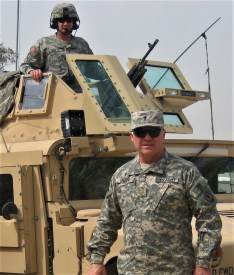
During War C-1The Black Hawk ride from Camp Victory, located at Baghdad International Airport, down to Ad Diwaniyah covered about 120 miles. Diwaniyah was the Iraqi headquarters for the militia leader Muqtada Al Sadr, and we got there just before Operation Black Eagle, meant to rein in militia violence, kicked off. Technically, my Chaplain Assistant and I were assigned to a military transition team, but for the past three years, Camp Echo had no Religious Support Team, so our job was to establish a religious program for the installation.
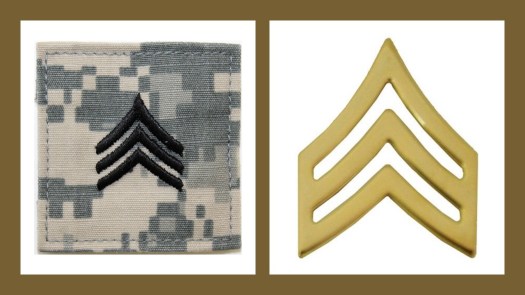


One day, after two weeks at Camp Echo, I got to the Dining Facility late. There were several casualties that day, and I spent a lot of time in the medical clinic, and with two units that had lost some Soldiers. I was tired and hungry, and finding an empty seat was difficult. Several units were at our forward operating base to assist with the operation, and many of the visiting Soldiers were in the dining facility.

Finally locating a vacant spot, I placed my tray on the table, but before I had a chance to sit, a Master Sergeant next to the empty chair growled in my direction, “No officers welcome here.” I doubt that he noticed the cross on my uniform. He probably just saw the major’s insignia on my chest, but it might not have made a difference even if he had recognized that I was a chaplain. There were three possible courses of action, and I had to make a quick decision.

1. Look for a different chair

2. Attempt to pull rank

3. Tell him I am an Honorary NCO

After completing a two-second strengths, weaknesses, opportunities, and threats analysis, I came to attention, turned up my collar to reveal a Sergeant E-5 insignia, and shouted as loud as I could, “Request permission to sit at your table, Master Sergeant,” then remained standing at attention and waited.

The growler did a double-take, and his eyes got real big. “Have a seat, Sarge.”

The other NCO’s at the table were howling with laughter by now. They knew the Master Sergeant, but they didn’t know me. And they had never seen a Major with NCO’s rank under the collar. They found the whole encounter to be quite entertaining.

After the others at the table calmed down, the Master Sergeant said, “OK. Suppose you tell me why you’re wearing that rank.”

“Sure, Master Sergeant. When I was a rookie fresh out of Officer Basic, my first assignment was with an Evacuation Hospital in the California Army National Guard, where I had a great rapport with the NCO’s. When they invited me to attend their dining-in, I thought it was because they wanted me to do the invocation, but that wasn’t it. During the program, the first sergeant pinned the NCO insignia on me and gave me a certificate appointing me to the honorary rank of sergeant, making me an E-5 for Life.”

“Hmmm. And you actually wear it?”

“Yes.”

I wore the SGT Stripes invisibly throughout my entire career. When in the woodland Battle Dress Uniform, it was pinned under my collar. When we switched to the newer army combat uniform, it was velcroed under the collar. And when I wore the Class A uniform or dress blues, it was under the pocket flap, beneath my name. Every time I went to a new unit, I met with the first sergeant or sergeant major, presented the documentation, and asked for permission to wear the rank and be part of the NCO corps. I was always welcomed.

After eight years in the Guard, I became an Active Duty chaplain in the Army Reserve’s Active Guard Reserve program. These chaplains don’t usually deploy, since our role was administrative and training. But while stationed at Fort McPherson, GA, in January 2007, I heard that the U.S. Army Forces Command wanted to send three chaplain teams to Iraq. There were some areas that needed religious support immediately, and Forces Command gave the task to the Army Reserve.

Strong Sense of Calling

As part of the chaplain staff at the U.S. Army Reserve Command headquarters, I had trained many chaplains before they went overseas. But this time I wanted to go. We were running out of chaplains who hadn’t already deployed. More importantly, I felt a strong sense of calling. We had Soldiers in dangerous places with no chaplain, and I wanted to be there with them, so I volunteered. It took a while, but I managed to talk my boss into letting me go.

Those sergeant stripes were under the collar when I went outside the wire with the military transition team. They accompanied me every time I visited wounded soldiers at the medical clinic. I wore them at each memorial ceremony or funeral. They were there for the worship services, the counseling appointments, and the Critical Incident Stress Management sessions. Whenever we had incoming rockets or mortars and we gathered in the bunkers—yep, still had them with me. One time I was eating lunch in the dining facility and the sirens started blaring. In a hurry to get out to the bunker, I forgot my helmet. My Chaplain Assistant grabbed me by the collar and pulled me back inside, “Chaplain, you forgot your Kevlar!” Just then a mortar landed right outside the door. It’s quite possible that she saved my life or prevented injury. See why I love NCOs?

The day after I met the master sergeant in the dining facility, he showed up in my office. The night before, he was feisty and energetic; now he seemed sad and tired. Something had happened.

“Good afternoon, Master Sergeant. What can I do for you?”

 “This morning, I lost a Soldier . . . a close friend. I wanted to know if you’d do a memorial ceremony tomorrow morning before we head out.”

“Of course, I will.”

“And Chaps, I’m sorry about last night.”

“Not a problem, Master Sergeant. I understand.”

“You can sit at my table any time.”

It meant a lot that this senior NCO welcomed me at his table, that he wanted me to be there to honor his friend and that we had overcome the invisible barrier between officer and NCO. In 2015, I retired as a Colonel. But I’ll be an E-5 for life.

* This article appeared in the September 2018 issue of Army Magazine, a publication of the Association of the United States Army.

E5 for Life

Life & Death: the Power of the Tongue

Proverbs 18:21 says life and death are in the power of the tongue.

When I came across Deborah Tannen’s book, You Just Don’t Understand, it looked good, so I bought it, took it home, and placed it on my nightstand. That night I picked it up and started reading, and reading, and reading. The more I read, the more I laughed out loud. The subtitle—what it’s really all about—is Men and Women in Conversation.

“What are you laughing about?” my wife wondered.

“I’m laughing cause she’s talking about you and me.”

“What?”

Every night I read a few more pages, still laughing. I’m sure Dr. Tannen didn’t mean for her book to be taken as a comedy. She wrote it as a straight-forward description of the way men and women communicate and fail to communicate, based on the way they think and their goals and purposes in the relationship. But when you see yourself and your spouse on every page, it makes you wonder, How did she know that’s what we do?

How Did She Know What We Do?

I think I learned more about communication with my wife from Tannen’s writing than from any other source. It was easy to see my wife’s foibles and laugh about them. Aha! See? That’s what you do! But then to read about what I do was a real eye-opener. I had to own up to my own patterns and behaviors.

What I learned was that Linda and I are pretty normal in how we communicate. In many ways, we fall into the stereotypes of male and female. But the way Dr. Tannen tells the stories is so funny. I called it my evening devotions. I had to read more.

One of the principles she discusses is the 3-fold asymmetry between the way men and women think and communicate.

  • Men talk to Report; women talk to Rapport.
  • When there’s a problem, men move immediately into Fix-it mode; women move into Affirmation mode.
  • Men speak to establish Hierarchy; women speak to establish Community.

Of course, these are generalities. There are men and women at both ends of each spectrum. All too often, however, husband and wife reach a stalemate because of their differences. Not understanding their communication styles and their subconscious purposes, they become frustrated or angry with each other, and that’s when they say things that hurt the other.

Proverbs 18:21 tells us that life and death are in the power of the tongue. What it’s saying is we can choose the easy, angry words and slice each other to shreds, destroying each other and the marriage in the process. Or, we can carefully choose words that affirm, heal, and build each other up. When we do that, we have a fantastic opportunity to create a marriage that’ll last a lifetime.

You can read more about this in chapter 9 of my book, WisdomBuilt Biblical Principles of Marriage

Couple 3

Writing Update: October 2019

In February, I published WisdomBuilt Biblical Principles of Marriage, and I’ve received a lot of positive feedback about it. The Lord is using it to help couples improve their marriage. Last month, I spoke at a ministry training conference, and in attendance were quite a few pastors and volunteer ministers who work with couples in their churches. The session went really well, and there’s even more interest in using WisdomBuilt in church classes, small groups, and couples retreats.

Since then, I completed a book about my ministry experience as an Army chaplain in Iraq. I’m really excited to announce that Dr. Richard Blackaby agreed to write the foreword for the book. Plus, I have endorsements from chaplains, pastors, Christian authors, and several denominational representatives. It’s titled Safest Place in Iraq, and is at the publisher now. They tell me it’ll be available as an ebook by early 2020, and in print by next summer.

It’s a collection of stories or testimonies about how the Lord moved in people’s lives at Camp Echo, where I served in 2007. Tell you what . . . the Lord did some fantastic things among us, and it’s exciting to be able to share these stories: answered prayer, healing, and people coming to faith in Christ.

Interestingly, in August I submitted the manuscript to the North Georgia Christian Writers Conference writing contest, and won a First Place Peach Award in the Bible Study & Nonfiction  Book category. I also entered it in the Florida Writers Association’s Royal Palm Literary Award writing competition, where it won a First Place Gold Award. Several Christian colleges and seminaries have already expressed interest in using it in their classrooms.

In the meantime, I’m teaching one class on campus at Southeastern University as an adjunct professor this fall. I volunteered to lead a 6-week Creative Writing course for a community-based senior citizen program here in Lakeland. I’ve been asked to mentor a missionary who is completing a Doctor of Ministry degree here. And, I continue to write devotional articles for CBN online, and freelance for a few other magazines from time to time.

So I manage to stay busy — maybe too busy!  🙂 But I’m having fun, and am thrilled to be able to speak into people’s lives, whether in person or through my writing.

Feel free to share this with your friends or post it on Facebook, Twitter, or LinkedIn. I’d love to get an email from you or note on the Contact Page letting me know how you’re doing.

Blessings to you,
Paul

Yada, Yada, Yada

The April 24, 1997 episode of the Seinfeld Show was titled the Yada, Yada. Neither Jerry Seinfeld nor the show’s writers coined the phrase “yada, yada.” It was already in use. But after being included on the show, the expression skyrocketed in popularity, and is still used by a lot of people.

There’s some debate about the origin of the phrase. Some say it’s from the English expression yatter, while others say it comes from the Norwegian jada, which is pronounced the same and means the same as yada. Other sources say it comes from Yiddish or Hebrew. In any case, it usually means the same as blah, blah, blah, or et cetera, et cetera, et cetera. Instead of reciting the boring details of a story, you say yada, yada, yada instead.

When you watch the Yada, Yada episode, however, it’s quite obvious from the way the characters tell their stories that there’s a sexual connotation and an intentional double meaning going on. Apparently, there is some evidence that yada is, indeed, a euphemism for sex. If so, when the Seinfeld cast says yada, yada, yada in those stories, what they’re really saying is sex, sex, sex. Watch it on YouTube and see if it seems that way to you.

Because people are sometimes shy about discussing sex, we often use euphemisms when talking about it. Some of those expressions are making love, going all the way, doing it, hanky-panky, and hitting a home run. My sister and her husband use the phrase twice around the park when referring sex. My wife and I use a different term.

Our teen-aged son never wanted to talk when we wanted to; he always waited ‘til late at night. When we were way past ready to go to bed . . . that’s when he was just coming alive and wanted to talk. One night he asked, “Hey guys. Wha’d you do on your honeymoon?” I have no idea what brought that question to his mind, or what he expected us to say.

There’s a lot of things we did on our honeymoon, but the one that came to mind was, “Well, Son. We played backgammon. Someone gave us a backgammon game as a wedding gift, and we took it with us. We stopped at a store and bought some instructions, and learned to play the game while on our honeymoon.”

“Oh. Okay.” Apparently, that satisfied his curiosity for the time being.

Two weeks later, we were in our bedroom with the door closed, but still fully clothed, playing backgammon on the bed, when there was a knock on the bedroom door. Same son wanted to talk.

“Dad, can we talk about something?”

“Sure, Son. Come on in.”

When he opened the door and saw us on the bed, his jaw dropped, eyes opened wide.  “Oh my gosh! You really do play backgammon!”

“What did you think I meant?”

“Uh . . . I thought you made it up ’cause you didn’t want to talk about what you really did on your honeymoon!”

“Oh! Well, we really did play backgammon.”

“Oh. My. Gosh.”

Ever since that conversation, “backgammon” has been a euphemism for sex in our family. “So that’s what you did on your honeymoon, heh heh.”

Yada = Knowing

When Genesis 4:1 says Adam was intimate with his wife Eve, the word translated as intimate is the Hebrew word yada. The Hebrew Bible, called the Tanach, from the Jewish Publication Society translates this verse, “Now the man knew his wife Eve, and she conceived and bore Cain.” The word knew has a footnote that says, Heb. yada, often in a sexual sense. Following the Jewish understanding of yada in this context, many English translations of Genesis 4:1 keep the idea to know. The word means to “know intimately, to know completely, to be familiar.” No wonder one of its additional meanings is to know sexually.

Other translations render the verse as follows. These are all appropriate ways to translate Genesis 4:1, where it says in Hebrew, Adam yada’d his wife.

  • Adam and Eve had a son.
  • The man knew his wife.
  • Adam had sexual intercourse with his wife.
  • Adam slept with his wife.
  • Adam had relations with his wife.
  • Adam made love to his wife.

One of John Gottman’s Seven Principles for Making Marriage Work is what he calls Love Maps. Couples with a strong, resilient marriage not only know each other, they know a lot about each other. “From knowledge springs not only love but the fortitude to weather marital storms. Couples who have detailed love maps of each other’s world are far better equipped to cope with stressful events and conflict.”

I met Dr. Gottman when he spoke at a college in Orlando a few years ago. During a private conversation about love maps, he said it’s not an accident that the word know is used for sexual intimacy in Genesis 4:1. Knowing each other is crucial to maintaining a satisfying love life.

backgammon-2488089_1920